How Long Does Botox Last? Duration, Results, and What Affects Botox Longevity
Botox is one of the most popular non-surgical cosmetic treatments used to reduce wrinkles and fine lines. Many people choose it to smooth forehead lines, crow’s feet, and frown lines without undergoing surgery. One of the most common questions patients ask is: how long does it last?
While Botox results are temporary, they can provide noticeable improvements for several months. Understanding the typical duration and the factors that influence how long Botox lasts can help patients plan maintenance treatments and achieve consistent results.
It is a purified protein derived from botulinum toxin type A. It works by temporarily relaxing specific facial muscles responsible for dynamic wrinkles. These wrinkles appear due to repeated facial movements such as smiling, squinting, or frowning.
By blocking nerve signals to the targeted muscles, Botox allows the skin to relax and smooth out, reducing the appearance of wrinkles while maintaining natural facial expressions.
Common treatment areas include:
- Forehead lines
- Frown lines between the eyebrows (glabellar lines)
- Crow’s feet around the eyes
- Bunny lines on the nose
- Chin dimpling
How Long Does Botox Typically Last?
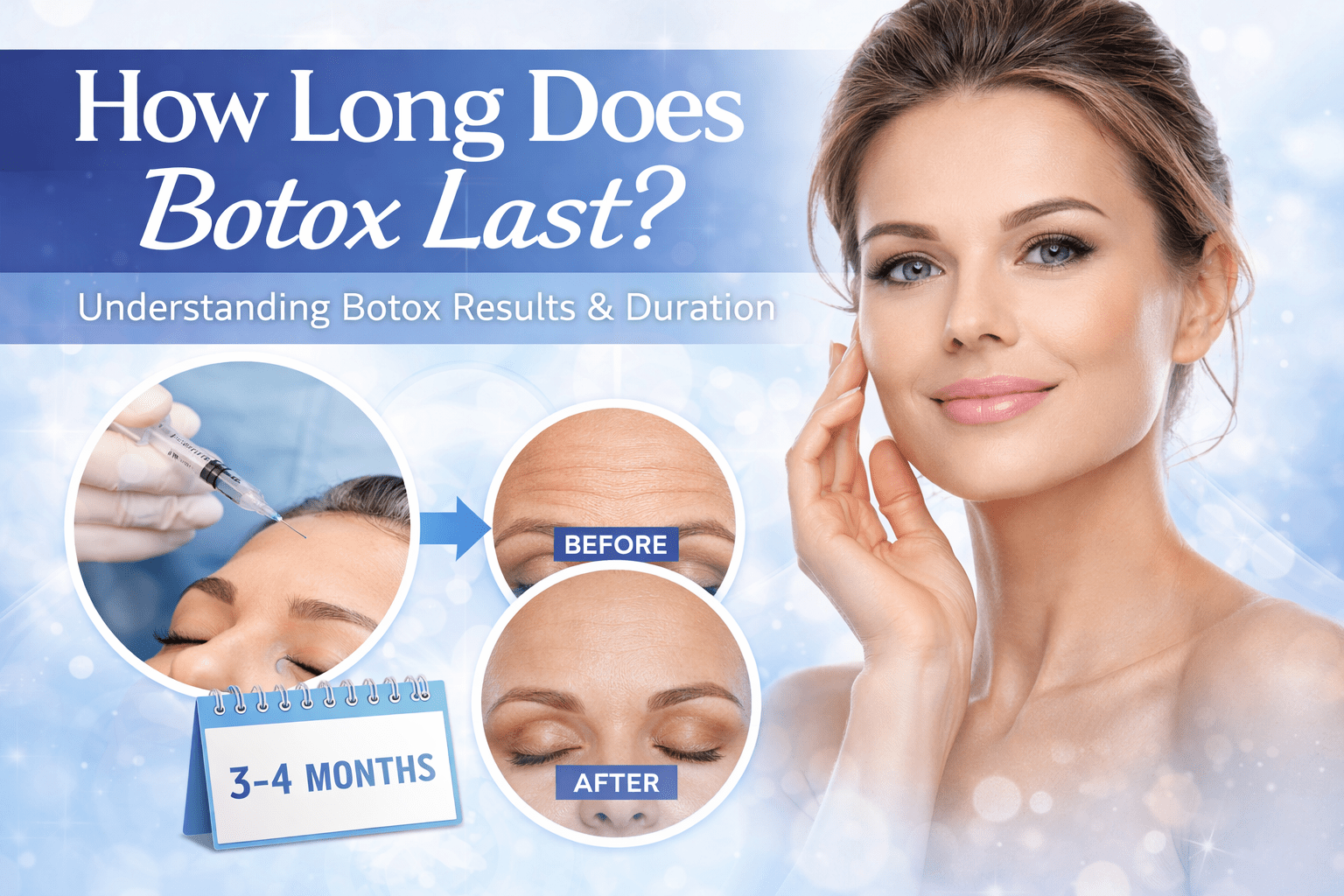
For most people, results last between 3 and 4 months. After this period, muscle activity gradually returns and wrinkles may begin to reappear.
Typical Botox timeline:
- 3–5 days: Initial results begin to appear
- 10–14 days: Full Botox results are visible
- 3–4 months: Effects gradually fade
- 4–6 months: Muscle movement returns to normal
Regular maintenance treatments can help maintain smoother skin and prevent wrinkles from becoming more pronounced over time.
Factors That Affect How Long Botox Lasts
Although Botox typically lasts several months, the exact duration varies depending on several factors.
Metabolism
People with faster metabolisms may break down Botox more quickly, which can shorten the duration of results.
Muscle Strength
Stronger facial muscles may require slightly higher doses and may metabolize Botox faster.
Treatment Area
Some areas of the face may experience longer-lasting results than others.
For example:
- Crow’s feet may last slightly longer
- Forehead lines may fade sooner due to frequent movement
Dosage and Injection Technique
The experience of the medical professional performing the injections and the amount of Botox used can significantly influence how long the results last.
Can It Last Longer Over Time?
Interestingly, many patients notice that Botox results begin to last longer after several treatments. This happens because repeated treatments can gradually train the muscles to contract less forcefully.
Over time, patients may:
- Need fewer units of Botox
- Experience longer-lasting results
- Develop less pronounced wrinkles
Consistent treatments every 3–4 months are typically recommended to maintain optimal results.
Tips to Help Botox Results Last Longer
Although Botox naturally wears off over time, certain habits may help extend the duration of results.
Helpful tips include:
- Following all post-treatment care instructions
- Avoiding excessive sun exposure
- Maintaining a healthy skincare routine
- Staying hydrated
- Scheduling regular maintenance appointments
Healthy skin habits can support longer-lasting cosmetic results.
Is Botox Safe?
When performed by qualified medical professionals, Botox is considered a safe and well-studied cosmetic treatment. It has been widely used in both cosmetic and medical settings for decades.
Common temporary side effects may include:
- Mild swelling or redness
- Minor bruising at the injection site
- Temporary headache
These effects usually resolve within a few days.
When Should You Get Botox Again?
Most patients schedule repeat treatments every 3 to 4 months to maintain consistent results. Waiting until muscle movement fully returns may allow wrinkles to reappear, which is why maintenance treatments are often recommended.
A personalized treatment plan can help determine the best schedule based on individual facial anatomy and aesthetic goals.
Medical Reference
For medical information on botulinum toxin treatments, see:
American Society of Plastic Surgeons
https://www.plasticsurgery.org
You can also explore scientific studies on Botox and wrinkle treatment through PubMed, a leading medical research database.