What Is a Tummy Tuck? Procedure, Types, and What to Expect
What Is a Tummy Tuck?
A tummy tuck, medically known as abdominoplasty, is a cosmetic surgery procedure designed to remove excess skin and fat from the abdomen while tightening weakened or separated abdominal muscles. The goal is to create a flatter, firmer, and more contoured midsection.
Many people develop loose abdominal skin and muscle separation after pregnancy, significant weight loss, or natural aging. While diet and exercise can improve muscle tone and reduce body fat, they cannot eliminate stretched skin or repair separated abdominal muscles. A tummy tuck addresses these concerns directly.
Individuals researching modern abdominoplasty procedures often seek a solution that restores abdominal contours when lifestyle changes alone are no longer enough.
How Does a Tummy Tuck Work?
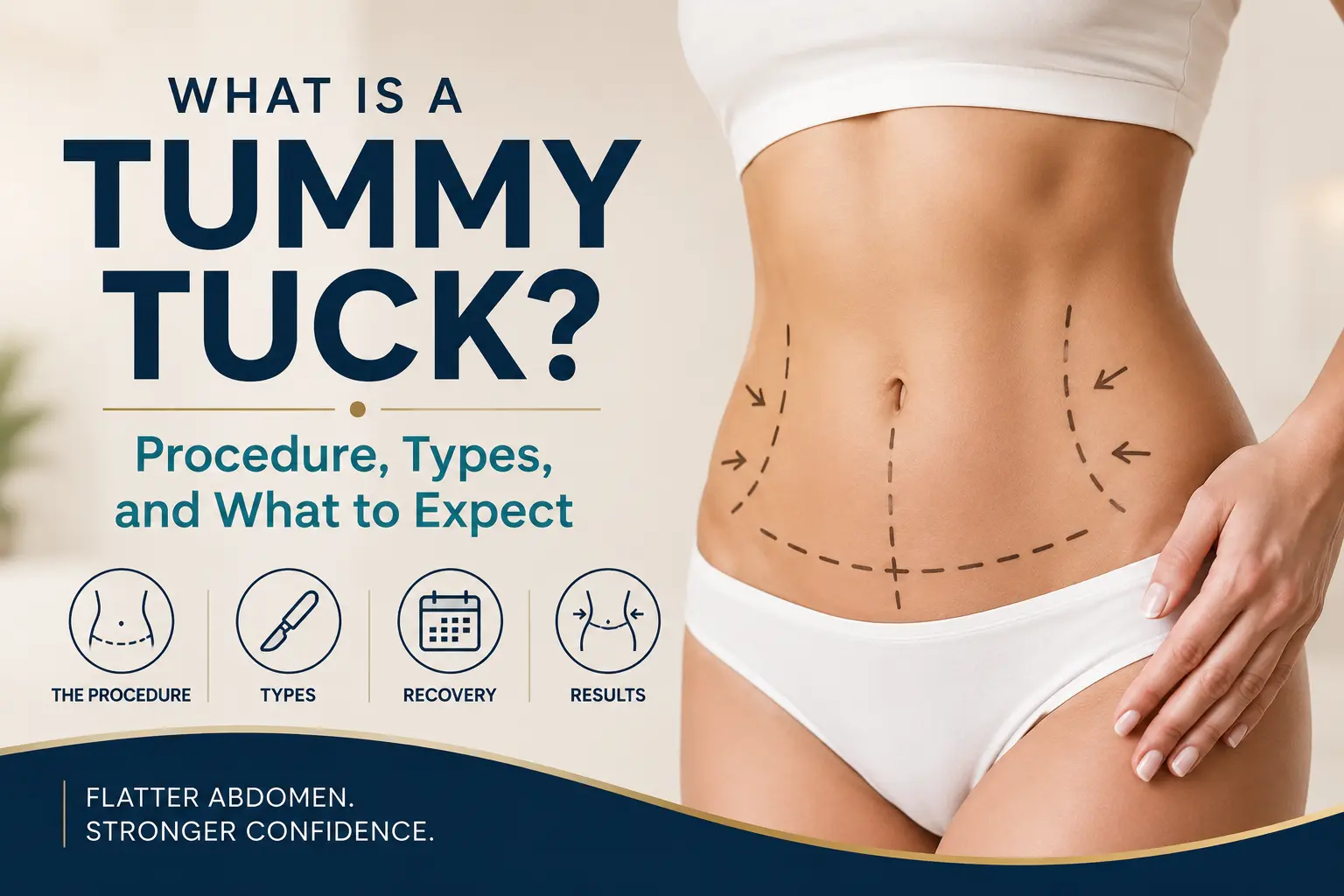
During a tummy tuck procedure, a plastic surgeon removes excess skin from the lower abdomen and tightens the abdominal wall. In most cases, the underlying muscles are repaired to improve abdominal strength and contour.
The procedure typically involves:
- Creating an incision low on the abdomen
- Removing excess skin and fat
- Tightening separated abdominal muscles
- Repositioning the belly button when necessary
- Closing the incision with sutures
The exact surgical approach depends on the patient’s anatomy and the type of tummy tuck being performed.
Why Do People Get Tummy Tuck Surgery?
Patients choose tummy tuck surgery for several reasons:
After Pregnancy
Pregnancy can stretch both skin and abdominal muscles. Even after returning to a healthy weight, many women experience loose skin and diastasis recti (muscle separation).
After Major Weight Loss
Individuals who lose a substantial amount of weight often have excess skin that cannot shrink naturally. A tummy tuck can remove this tissue and improve body proportions.
Aging and Skin Laxity
Natural aging reduces skin elasticity, which can contribute to sagging in the abdominal area.
Improved Body Contours
Many patients seek a flatter and smoother abdominal appearance that better reflects their fitness efforts.
Types of Tummy Tuck Procedures
There is no single tummy tuck technique suitable for everyone. Several options exist depending on the amount of skin laxity and muscle separation present.
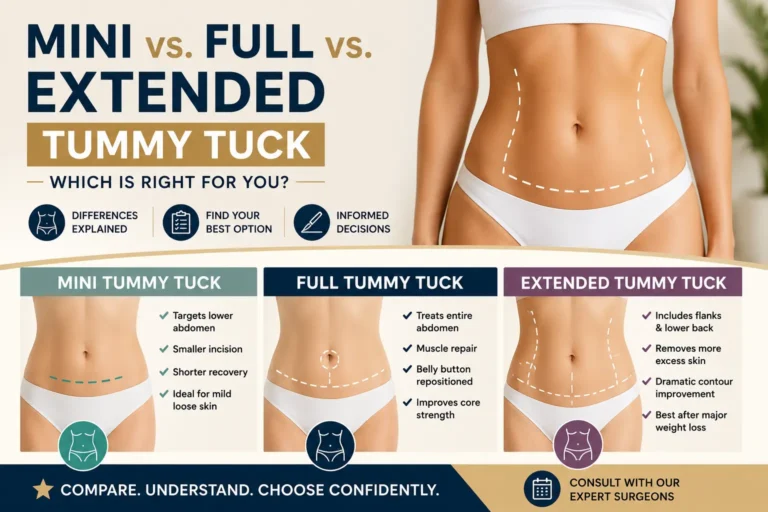
For a detailed comparison of the most common types of tummy tuck, patients should understand the differences between mini, full, and extended procedures.
Mini Tummy Tuck
A mini tummy tuck focuses on the area below the belly button. It is generally recommended for patients with mild skin laxity and minimal muscle separation.
Full Tummy Tuck
A full tummy tuck addresses the entire abdominal area. This is the most commonly performed version of the procedure and includes muscle repair when necessary.
Extended Tummy Tuck
An extended tummy tuck removes excess skin from both the abdomen and flanks. It is often recommended after significant weight loss.
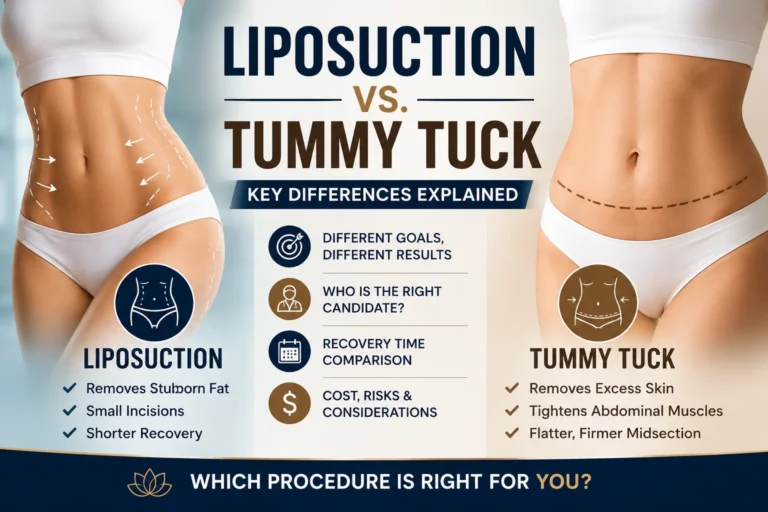
Tummy Tuck vs. Liposuction
One of the most common questions patients ask is whether they need liposuction or a tummy tuck.
Liposuction removes excess fat but does not tighten skin or repair abdominal muscles. A tummy tuck addresses loose skin and muscle laxity while also allowing fat removal when appropriate.
If you are deciding between these procedures, understanding a tummy tuck compared to liposuction can help clarify which option better matches your goals.
In some cases, surgeons combine both procedures to achieve more comprehensive body contouring results.
Who Is a Good Candidate?
You may be a good candidate for tummy tuck surgery if you:
- Have loose abdominal skin
- Have stretched or separated abdominal muscles
- Are close to your ideal weight
- Are in good overall health
- Do not smoke or are willing to stop smoking before surgery
- Have realistic expectations
Patients planning future pregnancies are often advised to postpone surgery until childbearing is complete.
What Happens During Recovery?
Recovery varies from patient to patient, but most individuals can expect:
First Week
- Swelling and tightness
- Limited mobility
- Need for compression garments
- Assistance with daily activities
Weeks 2–4
- Improved mobility
- Reduced discomfort
- Return to light activities
Weeks 4–8
- Gradual return to exercise
- Continued reduction in swelling
- Improved comfort during daily activities
Full healing and final contour refinement may continue for several months.
Risks and Potential Complications
Like any surgical procedure, tummy tuck surgery carries potential risks.
These may include:
- Infection
- Bleeding
- Poor wound healing
- Fluid accumulation (seroma)
- Scarring
- Temporary numbness
- Anesthesia-related complications
Choosing a qualified and experienced plastic surgeon helps reduce these risks significantly.
How Much Does a Tummy Tuck Cost?
Costs vary depending on:
- Geographic location
- Surgeon experience
- Facility fees
- Anesthesia fees
- Procedure complexity
Patients researching costs can review our complete tummy tuck pricing guide to better understand the factors that influence overall treatment expenses.
What Results Can You Expect?
Most patients notice:
- A flatter abdominal profile
- Improved waist definition
- Better clothing fit
- Increased confidence
- Correction of muscle separation
Results are typically long-lasting when maintained through a stable weight and healthy lifestyle.
Frequently Asked Questions
Is a tummy tuck the same as weight loss surgery?
No. A tummy tuck is a body contouring procedure, not a weight loss operation.
Will a tummy tuck remove stretch marks?
Some stretch marks located on the removed skin may be eliminated, but not all stretch marks disappear.
How painful is a tummy tuck?
Most patients experience moderate discomfort during the first week, which can usually be managed with prescribed medications.
Can men get tummy tucks?
Yes. Men who have experienced weight loss or skin laxity can also benefit from abdominoplasty.
Final Thoughts
A tummy tuck is one of the most effective procedures for addressing loose abdominal skin, weakened muscles, and contour irregularities that cannot be corrected through exercise alone. Understanding the different techniques, recovery expectations, and candidacy requirements can help you determine whether abdominoplasty is the right choice for your goals.
If you are considering tummy tuck surgery and would like personalized recommendations, schedule a consultation with our team to discuss your options.