Liposuction vs. Tummy Tuck: Key Differences Explained
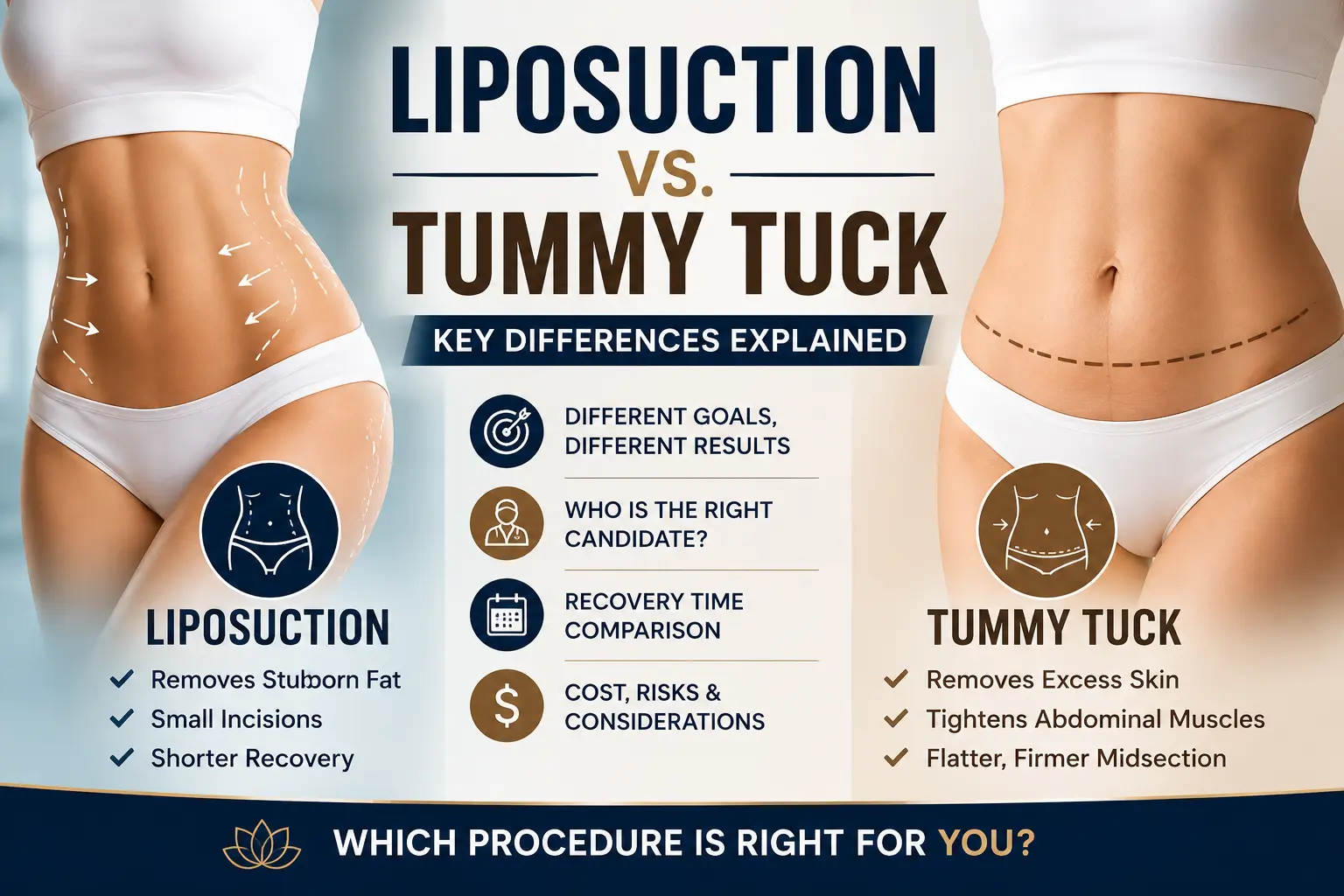
One of the most common questions people ask when considering cosmetic body contouring is whether they need liposuction or a tummy tuck. While these procedures are often discussed together, they address very different concerns and are designed to achieve different outcomes.
Many patients assume that both procedures simply remove unwanted fat. In reality, liposuction is primarily a fat-removal procedure, while a tummy tuck addresses loose skin, weakened abdominal muscles, and excess tissue that cannot be corrected through diet, exercise, or fat reduction alone.
Understanding the differences between these popular body sculpting treatments can help you choose the procedure that best matches your goals and expectations.
Understanding the Core Difference
The simplest way to understand the distinction is to look at what each procedure is designed to correct.
Liposuction Removes Fat
Liposuction targets localized fat deposits that remain resistant to healthy lifestyle habits. Even individuals who maintain a stable weight may struggle with stubborn fat accumulation around the abdomen, flanks, thighs, hips, back, or arms.
The procedure removes fat cells through small incisions using specialized suction techniques. Once removed, those fat cells do not return, although remaining fat cells can still enlarge if significant weight gain occurs.
Liposuction does not tighten loose skin and does not repair abdominal muscles.
Tummy Tuck Removes Skin and Repairs Muscles
A tummy tuck is a more comprehensive surgical procedure.
Unlike liposuction, a tummy tuck removes excess skin and can repair stretched or separated abdominal muscles. This makes it particularly beneficial for patients who have experienced pregnancy, major weight loss, or significant skin laxity caused by aging.
Patients unfamiliar with the tummy tuck procedure are often surprised to learn that muscle repair is one of the most important components of abdominoplasty.
What Problems Does Liposuction Treat?
Liposuction is best suited for patients who have relatively good skin elasticity but struggle with stubborn fat deposits.
Common treatment areas include:
- Abdomen
- Waistline
- Love handles
- Hips
- Thighs
- Back
- Arms
- Neck and chin
The ideal candidate is typically close to their target weight but wants improved body contours.
Liposuction should not be viewed as a weight-loss procedure. Instead, it is a body contouring treatment designed to refine specific areas that have not responded to diet and exercise.
What Problems Does a Tummy Tuck Treat?
A tummy tuck addresses concerns that liposuction simply cannot fix.
These may include:
- Loose hanging abdominal skin
- Stretching after pregnancy
- Diastasis recti (muscle separation)
- Excess tissue following major weight loss
- Lower abdominal bulging
- Weakness in the abdominal wall
Many patients develop these issues even after successfully reaching a healthy weight. In such situations, fat removal alone often fails to produce the desired result.
A tummy tuck allows surgeons to reshape the abdomen by removing skin, tightening muscles, and improving overall contour.
Which Procedure Produces a Flatter Stomach?
The answer depends entirely on the cause of the abdominal fullness.
When Fat Is the Main Problem
If excess abdominal fat is the primary concern and skin quality remains good, liposuction may create excellent results.
Removing stubborn fat deposits can significantly improve abdominal definition without the need for more extensive surgery.
When Skin and Muscle Laxity Are Present
If loose skin or muscle separation exists, a tummy tuck generally provides superior results.
Many patients who choose liposuction despite significant skin laxity discover that fat removal alone can actually make loose skin appear more noticeable.
For these individuals, understanding and choosing a tummy tuck type becomes more important than simply removing fat.
Recovery: Liposuction vs. Tummy Tuck
Recovery is another major difference between these procedures.
Liposuction Recovery
Liposuction recovery is generally shorter.
Patients commonly experience:
- Bruising
- Swelling
- Mild soreness
- Temporary numbness
Many individuals return to desk work within several days and resume most activities within a few weeks.
Compression garments are typically worn to reduce swelling and support contour formation.
Tummy Tuck Recovery
Tummy tuck recovery is more extensive because the surgery involves skin removal and muscle repair.
Patients can expect:
- Increased tightness
- More swelling
- Temporary mobility limitations
- Longer activity restrictions
- Greater need for postoperative support
Most patients require several weeks before resuming normal activities and several months before final results fully develop.
Can Liposuction and a Tummy Tuck Be Combined?
Yes, and they frequently are.
In fact, many surgeons combine the procedures because they address different aspects of body contouring.
Liposuction removes excess fat while the tummy tuck removes excess skin and tightens muscles.
Combining treatments often produces more comprehensive body reshaping than either procedure alone.
This approach is particularly common in patients seeking a full mommy makeover surgery, where multiple areas of concern are addressed during a single treatment plan.
Comparing Scars
Scarring is another important consideration.
Liposuction Scars
Liposuction incisions are very small and often become difficult to notice after healing.
Because only tiny access points are needed, scarring is typically minimal.
Tummy Tuck Scars
A tummy tuck requires a longer incision positioned low on the abdomen.
Although surgeons attempt to place the scar where it can be hidden beneath underwear or swimwear, it remains a permanent part of the procedure.
Patients should understand this trade-off before choosing surgery.
For many individuals, the improvement in abdominal contour outweighs concerns about scarring.
Cost Comparison
Generally speaking, liposuction costs less than a tummy tuck.
However, the exact difference depends on:
- Number of treatment areas
- Surgical complexity
- Geographic location
- Facility fees
- Anesthesia costs
- Surgeon experience
A large-volume liposuction procedure may sometimes approach the cost of a tummy tuck.
Comparing procedures based solely on price is rarely the best approach because each operation serves a different purpose.
The goal should be selecting the treatment that addresses the underlying problem rather than the least expensive option.
Risks and Potential Complications
All surgical procedures involve risks.
Patients should understand these possibilities before making treatment decisions.
Liposuction Risks
Potential risks include:
- Infection
- Bleeding
- Fluid accumulation
- Contour irregularities
- Temporary numbness
- Skin looseness after fat removal
- Asymmetry
- Blood clots
Although serious complications are uncommon, proper patient selection and experienced surgical care remain essential.
Tummy Tuck Risks
Potential risks may include:
- Infection
- Bleeding
- Seroma formation
- Delayed wound healing
- Scarring
- Changes in skin sensation
- Tissue necrosis
- Blood clots
- Anesthesia complications
- Need for revision surgery
Because tummy tuck surgery is more extensive, recovery and risk management are generally more involved.
How Risks Are Minimized
Surgeons help reduce risks by:
- Performing thorough evaluations
- Reviewing medical history
- Optimizing patient health before surgery
- Using accredited surgical facilities
- Providing detailed recovery instructions
Following postoperative recommendations closely is one of the most important factors in achieving a safe recovery.
Who Is a Good Candidate for Liposuction?
You may be a good candidate if you:
- Are close to your ideal weight
- Have good skin elasticity
- Have localized fat deposits
- Do not have significant loose skin
- Are in good overall health
- Have realistic expectations
Liposuction works best as a contouring procedure rather than a solution for major body changes.
Who Is a Good Candidate for a Tummy Tuck?
You may be a good candidate if you:
- Have loose abdominal skin
- Have separated abdominal muscles
- Have experienced pregnancy-related changes
- Have undergone significant weight loss
- Are near a stable weight
- Are healthy enough for surgery
Patients with extensive skin laxity typically achieve better outcomes from abdominoplasty than from liposuction alone.
Which Procedure Is Right for You?
The answer depends on the specific issues you want to address.
If stubborn fat is your primary concern and skin quality remains good, liposuction may be sufficient.
If loose skin, abdominal bulging, or muscle separation are the main concerns, a tummy tuck often provides a more effective solution.
For some patients, combining both procedures delivers the most comprehensive improvement.
A consultation with an experienced plastic surgeon is the most reliable way to determine which treatment aligns with your anatomy, goals, and expectations.
Final Thoughts
Although liposuction and tummy tuck surgery are often compared, they are not interchangeable procedures. Liposuction focuses on fat removal, while a tummy tuck addresses excess skin and weakened abdominal muscles. Understanding this distinction is essential when evaluating your body contouring options.
Choosing the right procedure depends on your anatomy, aesthetic goals, recovery preferences, and overall health. A personalized consultation can help determine whether liposuction, abdominoplasty, or a combination of both is the most appropriate approach for achieving your desired results.
Medical Disclaimer
The information provided in this article is for educational and informational purposes only and should not be considered medical advice. Plastic surgery procedures, recovery experiences, risks, and outcomes vary from person to person. Reading this content does not establish a doctor-patient relationship.
Anyone considering cosmetic or reconstructive surgery should consult with a qualified healthcare professional or board-certified plastic surgeon for personalized evaluation, diagnosis, and treatment recommendations. Never disregard professional medical advice or delay seeking medical care based on information found online.