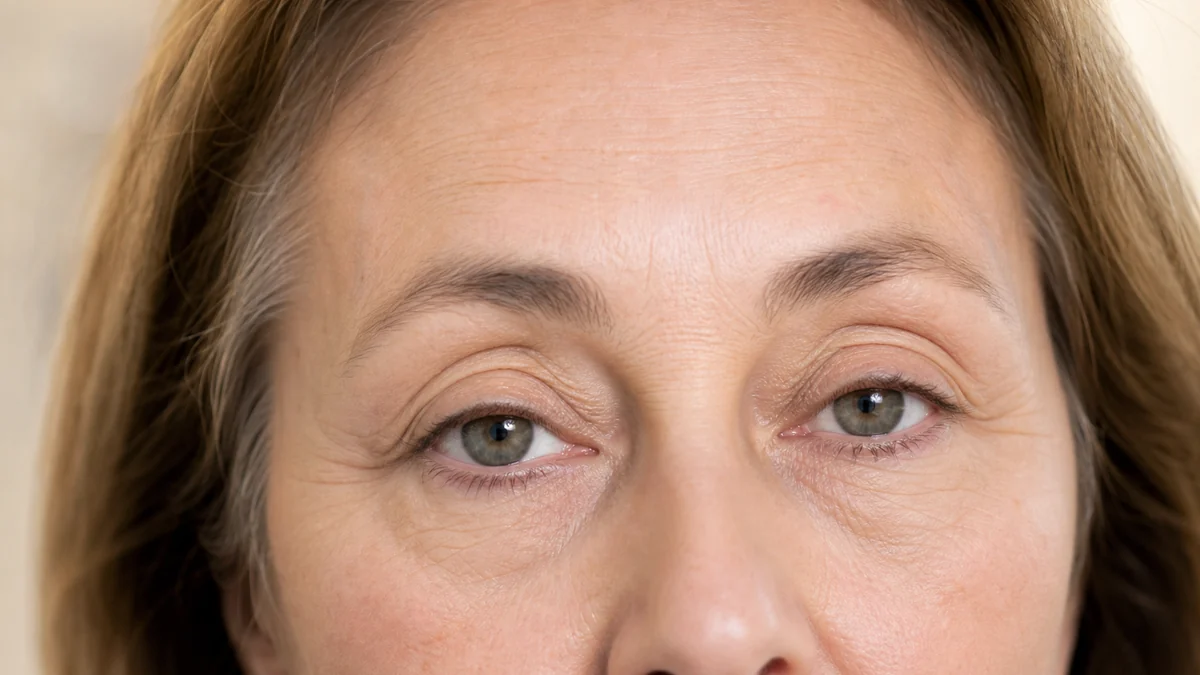
Blepharoplasty before and after photos are among the most common in cosmetic surgery search results, but they're also among the most misread — because "eyelid surgery" covers two distinct procedures targeting two different problems. Upper and lower blepharoplasty share a name and are sometimes performed together, but they address entirely separate anatomy and candidacy criteria. Knowing which one applies to your specific concern — and what neither can fix — will save you from comparing your situation to the wrong kind of result. According to ASPS annual statistics, blepharoplasty has consistently ranked among the top five cosmetic surgical procedures in the United States each year, reflecting how common the concern is — but volume alone doesn't make it the right answer for every eyelid-area complaint.3
What Upper Eyelid Surgery Changes
Upper blepharoplasty removes excess skin and sometimes a portion of herniated orbital fat and underlying orbicularis muscle from the upper eyelid. The most visible effect is correction of hooding — the draping of excess skin over the upper lid margin that creates a heavy, tired, or even angry appearance even when a person is well rested. In more advanced cases, that overhanging skin descends below the pupil line and actively restricts the superior visual field.
The functional dimension of upper blepharoplasty is clinically meaningful. A systematic review of 28 studies found consistent improvements in visual field, headache frequency, and quality of life following upper blepharoplasty in appropriately selected patients.1 A separate Goldmann perimetry study measured a nearly five-fold average improvement in superior visual field after upper lid surgery.2 This functional basis is why upper blepharoplasty is the only eyelid procedure that insurance may sometimes cover — but only when a formal visual field test documents the obstruction, and the bar is specific.
The incision is placed within the natural upper eyelid crease, where it heals to a near-invisible line within a few months. Most upper blepharoplasties are outpatient procedures performed under local anesthesia with sedation, taking 45 to 90 minutes depending on whether one or both lids are treated and whether fat reduction is included. Candidates are generally adults who have allowed their facial development to complete and who have realistic expectations: the goal is a more rested and open upper lid, not a fundamentally different eye structure.
What Lower Eyelid Surgery Changes
Lower blepharoplasty targets an entirely different concern: puffiness and bag formation caused by orbital fat pads herniating forward beneath the lower lid, sometimes compounded by excess lower lid skin. This is a purely cosmetic procedure — there is no functional lower blepharoplasty for vision improvement.
Two main technical approaches exist and are chosen based on each patient's anatomy. The transcutaneous approach places a small incision just below the lower lash line, allowing both skin and fat to be addressed through the same incision — the better choice when both excess skin and fat are present. The transconjunctival approach accesses the fat pads from inside the lower lid through the conjunctival surface, leaving no visible external scar — preferred when fat is the primary issue and skin elasticity remains good, which is common in younger patients. Some surgeons reposition the herniated fat rather than excising it entirely, redistributing it to smooth the transition at the orbital rim instead of simply hollowing the space beneath the lid.
One distinction worth making explicit: lower blepharoplasty can dramatically improve under-eye bags and puffiness, but it does not reliably improve dark circles or fine lines — two separate concerns frequently confused with bagging but caused by entirely different underlying factors, covered in the next section.
What Eyelid Surgery Does NOT Fix
Blepharoplasty has real limits that galleries and marketing content rarely spell out clearly. Understanding these boundaries is as important as understanding what surgery does change, because misaligned expectations are among the most consistent drivers of post-surgical dissatisfaction.
Eyebrow position. A descended or heavy brow can produce upper lid hooding that looks identical to excess eyelid skin — but the underlying cause is the brow, not the eyelid. Operating on the eyelid in this situation without addressing brow descent will produce a disappointing result, and in some cases can leave the upper lid looking tight or pulled. A brow lift is the appropriate intervention when a brow is the driver of the hooded appearance, and a good consultation will differentiate these before any plan is made.
Dark circles. Under-eye darkness is caused primarily by pigmentation in the thin lower lid skin, by visible vasculature showing through that skin, and by the shadowing created by the orbital rim's bony contour — none of which blepharoplasty directly addresses. Removing bags can reduce the shadow component of dark circles marginally (because the puffiness that casts shadow is removed), but pigmentation and skin translucency do not change.
Fine lines and crow's feet. These are skin quality and elasticity issues, not excess-tissue issues. Blepharoplasty removes tissue — it doesn't resurface or biologically regenerate skin. Laser resurfacing, chemical peel, or radiofrequency skin-tightening can be complementary additions to a comprehensive treatment plan, but they are separate procedures with different mechanisms and recovery profiles.
True ptosis. A drooping of the lid margin itself — caused by a weakened or stretched levator muscle — is a structurally different problem from skin excess. Blepharoplasty removes skin; it does not repair the levator mechanism. Our guide on ptosis vs dermatochalasis explains why this distinction changes the surgery you need.
The Swelling Timeline Behind the Photos
Eyelid tissue is among the most swelling-prone in the body due to its thin skin, loose subcutaneous tissue, and proximity to dependent lymphatic drainage. This makes understanding the swelling timeline essential for interpreting photos — your own included.
Days 1–7: Bruising and swelling are at their peak, with the lids appearing puffy, stiff, and possibly asymmetric. Many patients look notably different from their pre-operative appearance in this window — not in a flattering direction. Cold compresses and keeping the head elevated are standard recovery measures.
Weeks 2–3: Visible bruising resolves substantially and most patients feel comfortable returning to social activities and light work. This is when most "recovery update" photos are taken — but residual swelling still makes the lids appear slightly tighter and less natural than the final outcome will look.
Months 2–3: The incision lines begin to soften and fade, swelling continues to reduce, and the eye begins to look rested and natural rather than operated. Most patients are noticeably happy with their result by this stage.
Months 3–6: The fully settled result — including the incision's maturation and the soft, natural-looking contour around the lid — is typically established by month 6. A photo labeled "2 weeks post-op" is showing early recovery, not the final result. When evaluating a surgeon's portfolio, always note how many months post-operative each photo is.
Reading Photos Critically
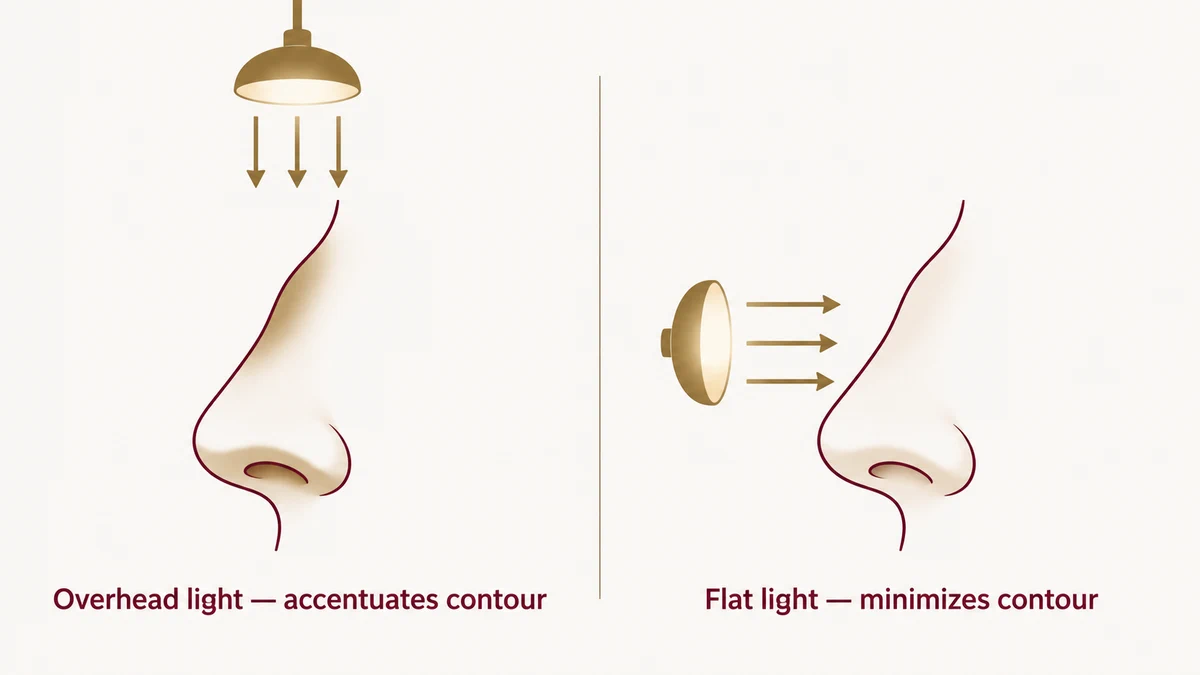
Beyond timing, several photographic variables significantly change how dramatic a blepharoplasty result appears. Developing a critical eye for these helps you set realistic expectations and evaluate surgeons more effectively.
Gaze direction and eye aperture
How open or closed the eye is held in a shot matters more than most patients realize. A slightly wider gaze in the "after" photo — which patients often adopt unconsciously post-surgery because they can open their eyes more easily — creates a more dramatic-looking comparison than the surgery alone produced. Look for photos where the patient's gaze is genuinely neutral and relaxed in both frames.
Camera angle and distance
A slightly downward camera angle in the "after" photo can minimize the appearance of residual upper lid skin, while an upward angle can exaggerate lower lid fullness. Consistent camera distance also matters — a closer crop in the "after" makes the eyes appear larger relative to the face. Standardized clinical photography uses a fixed tripod distance and head position for this reason.
Lighting direction
Overhead lighting in the "before" photo creates shadows in the upper lid crease and under-eye hollows that accentuate hooding and bags. Flat, diffuse lighting in the "after" minimizes those same shadows, making the result look smoother than it might under harsher conditions. Consistent lighting direction between both photos is essential for a fair comparison.
Makeup as a confounder
Many post-operative photos in cosmetic surgery galleries feature eye makeup that accentuates the result — which is not inherently dishonest, but is worth noting when you're comparing to your own bare appearance. Eyeliner, shadow, and mascara all emphasize the newly visible lid platform and make the eyes look more defined. For the most useful comparison, look for bare-skin photos in both frames.
What blepharoplasty photos rarely show
- Incision lines at full maturity: Most galleries show results at 3–6 months, when the crease incision is still fading. The fully-matured scar at 12+ months is rarely photographed but is what you'll live with.
- The eye in motion: Static photos don't show how the eyelid moves during blinking, squinting, or looking up — where residual asymmetry or tightness may be more apparent than at rest.
- The eyes looking down: Upper blepharoplasty results are most visible with eyes open and looking forward. How the lid skin drapes when looking down reveals information about how much tissue was removed — too little and the hooding recurs, too much and the skin appears taut.
- Combined procedure disclosure: A result labeled "blepharoplasty" that also included a brow lift, fat transfer, or laser resurfacing will look more rejuvenated than eyelid surgery alone. Always check what procedure(s) the gallery photo represents.
For the most useful comparison, look for before-and-after pairs with consistent camera distance, consistent lighting direction, and consistent gaze direction. Inconsistencies in photographic conditions across a pair can make a result look more dramatic than it actually is. Also ask specifically which procedure was performed in a given photo: upper only, lower only, or combined. A combined result looks different from an upper-only result, and you should be comparing to cases that match your own planned surgery. For more guidance on evaluating before-and-after galleries critically, see our guide to reading a surgeon's gallery.
| Upper Blepharoplasty | Lower Blepharoplasty | |
|---|---|---|
| Targets | Hooding, heavy lid skin, orbital fat | Under-eye bags, puffiness, excess skin |
| Approach options | Skin/fat excision through crease incision | Transcutaneous or transconjunctival |
| Can be functional | Yes, if visual field is documented obstructed | No — cosmetic only |
| Doesn't fix | Brow position, dark circles, ptosis | Dark circles, fine lines, ptosis |
| Insurance possible | Sometimes, with documented field obstruction | No |
| Final result visible | 3–6 months | 3–6 months |
How Long Results Last
Because blepharoplasty removes excess skin and fat rather than temporarily repositioning tissue, results tend to be genuinely long-lasting — often a decade or more — since removed tissue does not return. The eyelids continue to age naturally after surgery, though: the remaining skin continues to lose elasticity, and the underlying fat pads can shift further over time. Most patients retain the improvement for many years before new changes become significant enough to consider addressing.
Several factors influence how long results last. Sun exposure is one of the most meaningful accelerants of eyelid skin aging and elasticity loss — patients who protect the periorbital area from UV typically maintain their results longer. Genetics plays a role, particularly in patients from families with a pattern of early or pronounced eyelid aging. Age at surgery matters too: a patient operated at 45 with good baseline skin quality starts from a more favorable position than one operated at 65, even with the same degree of tissue removed.
Smoking is a documented negative factor for wound healing and periorbital skin quality and is worth addressing before scheduling any elective facial surgery. Some patients, years after an initial blepharoplasty, find they want a touch-up as new changes develop — this is normal and possible, provided enough tissue is safely available for a second conservative excision. Learn more about the full range of eyelid procedures and anatomy in our eyelid surgery overview.
Frequently Asked Questions
Does blepharoplasty fix dark circles?
No — dark circles are primarily a pigmentation and skin-thinness issue, not excess skin or fat, so eyelid surgery does not reliably resolve them. Lower blepharoplasty addresses under-eye bags and puffiness, which is a different, distinct concern from discoloration. Removing bags may reduce the shadow component slightly, but skin tone and pigmentation don't change with surgery.
When do you see final results?
Most visible bruising and swelling resolve within about 2 to 3 weeks, but subtler swelling can linger for several months, so the fully settled result is typically seen around the 3 to 6 month mark. Early photos taken in the first couple of weeks tend to look more swollen and tighter than the eventual outcome.
Upper or lower — which do I need?
It depends on where your specific concern is located: upper blepharoplasty addresses hooding and heaviness of the upper lid, while lower blepharoplasty addresses under-eye bags and puffiness. Many patients need only one; some benefit from both. See our eyelid surgery overview for how surgeons assess this at consultation.
Will eyelid surgery change my eye shape?
A well-performed blepharoplasty removes excess skin and fat without fundamentally altering your natural eye shape, though it makes eyes appear more open and refreshed. Overly aggressive skin removal is a recognized risk — it can lead to difficulty closing the eye fully — which is why conservative technique and surgeon experience both matter considerably.
How long do blepharoplasty results last?
Results are generally long-lasting, often a decade or more, since removed skin and fat don't fully return, though the eyelids continue to age naturally afterward. Sun exposure, genetics, and age at surgery all influence duration. Some patients pursue a touch-up years later as new aging changes develop.
Can blepharoplasty be done without surgery?
Non-surgical treatments like radiofrequency skin tightening or filler can offer modest, temporary improvement for mild cases, but they don't remove excess skin or fat the way surgery does. Patients with significant hooding or true under-eye bagging typically need the surgical procedure for a meaningful, lasting change.