Breast reduction photos are some of the most dramatic in plastic surgery, which is exactly why they are easy to misread. One pair of images compresses less volume, a new shape, a higher nipple and months of healing into a single comparison, and leaves out the reason many people have the surgery at all. For the procedure itself, see our breast reduction overview.
Size Change vs Shape Change
A breast reduction is not simply "the same breast, only smaller." The operation reduces overall breast volume while keeping the nipple and areola alive and creating a better shape.3 In practice, the surgeon removes excess tissue and skin, moves the nipple to a higher position, reduces the areola if needed, and then lifts and shapes the breast tissue that remains.2 That means every reduction is also, in effect, a lift.
Those two changes follow different clocks, which matters when you look at photos:
- Size changes on the operating table. Tissue that is removed does not come back, so the drop in volume is visible from the first post-operative photo.
- Shape takes months. Early on the breasts are swollen, firm and often sit high and round; as swelling resolves, the lower breast softens and the contour becomes more natural.
ASPS lists reduced size, improved shape and relief from physical symptoms among the immediate results, and describes the result as long-lasting.1 When you look at an "after" photo, judge separately how much smaller the breast is, how it is shaped, and where the nipple sits relative to the crease.
Patients with significant sagging sometimes ask for a reduction when what they actually need is a lift.3 If your main concern is position rather than volume, see our breast lift before and after guide.
Anchor and Vertical Scars at 3, 12 and 24 Months
Every breast reduction leaves permanent incision lines, though in most cases they fade over time.2 Most reductions use one of two patterns. A vertical (lollipop) scar circles the areola and runs straight down to the breast crease, typically for moderate reductions. An anchor (inverted-T) scar adds a horizontal line along the crease, typically for larger reductions. Here is how both tend to look at the time points most often shown in photos:
| Time after surgery | Vertical (lollipop) | Anchor (inverted-T) |
|---|---|---|
| 3 months | Pink to red, may be firm or slightly raised; around the hardest-looking stage | Same stage, plus a horizontal line along the breast crease |
| 12 months | Clearly paler and flatter; settled, though still visible up close | Paler and flatter; the crease portion is largely hidden when standing |
| 24 months | Mature: soft, flat, close to skin tone, though some pigment difference can remain on darker skin | Mature, with the same caveats; overall scar length remains greater than the vertical pattern |
The practical lesson for reading photos: a three-month "after" picture shows the scar near its worst, and a two-year picture shows it near its best. Neither is dishonest, but you need to know which one you are looking at.
This is a summary only. Our breast reduction scars guide has the full month-by-month healing timeline, what affects scar quality, and which scar treatments have real evidence behind them.
Symptom Relief That Photos Don't Show
For many patients, the most important change after a reduction is invisible. Neck, back and shoulder pain related to breast weight, bra strap grooving and rashes are all documented as part of the standard pre-surgical assessment.3 No photo captures them.
The evidence that surgery relieves those symptoms is fairly strong. In a prospective study of 179 women having breast reduction, half reported breast-related pain in the upper back, shoulders, neck and lower back all or most of the time before surgery, compared with fewer than 10 percent six to nine months afterward.4 The same study found that conservative measures the women had tried, including weight loss, physical therapy, special bras and medications, had not provided lasting relief.4
A 2026 systematic review and meta-analysis of 47 studies reached a consistent conclusion: every included study that measured back pain reported relief after reduction, and in a pooled analysis of 12 studies about 90 percent of patients had meaningful improvement in back pain.5 The authors also found a modest improvement in upper-back posture, while effects on the lower spine were less consistent.5
So a result that looks only moderately different on camera may still have changed someone's daily life a great deal. Symptoms are also what insurers usually weigh when deciding medical necessity. Our breast reduction insurance guide explains how that documentation works, and our insurance and cost hub covers coverage more broadly.
Breastfeeding and Future Changes
A photo freezes one moment. For younger patients especially, two questions matter: can you breastfeed, and how will the result change over time?
Breastfeeding after reduction
Plans for pregnancy and breastfeeding are part of the standard history taken before surgery.3 The answer depends heavily on technique. A systematic review of 51 studies found that the key factor was whether the surgeon preserved the column of breast tissue running from beneath the nipple to the chest wall. Median breastfeeding success was 4 percent with techniques that did not preserve it, 75 percent with partial preservation and 100 percent with full preservation, although results varied widely between studies.6 The authors recommended that patients be told before surgery whether this tissue will be preserved.6
For very large reductions, the nipple and areola are sometimes removed and placed back higher as a graft. ASPS notes that in this case the nipple and areola will not have sensation after surgery.2 If future breastfeeding matters to you, ask directly which technique is planned and what it means for milk supply and sensation.
How results change over the years
The removed tissue does not regrow, but the breast that remains is still living tissue. ASPS notes that breasts can change over time with aging, weight fluctuations, hormonal factors and gravity.1 This is why history of significant weight change is part of the pre-surgical assessment.3 When you see a long-term "after" photo, it is fair to ask whether the patient's weight stayed similar or whether there was a pregnancy in between.
How to Read Breast Reduction Before-and-After Photos
Our general guide to evaluating a surgeon's before-and-after photos covers the basics. These are the variables that matter most for breast reduction specifically.
Pose and posture
Shoulders pulled back, arms raised or a slightly arched back all lift the chest and make breasts look higher and smaller. Heavy-breasted patients often stand rounded forward in "before" photos because of the weight they carry, and reviews do report a modest improvement in upper-back posture after surgery,5 so some posture change is real. Still, a fair comparison shows the same stance, camera distance and views (front, obliques and sides). Side views are especially useful because they show projection.
Lighting
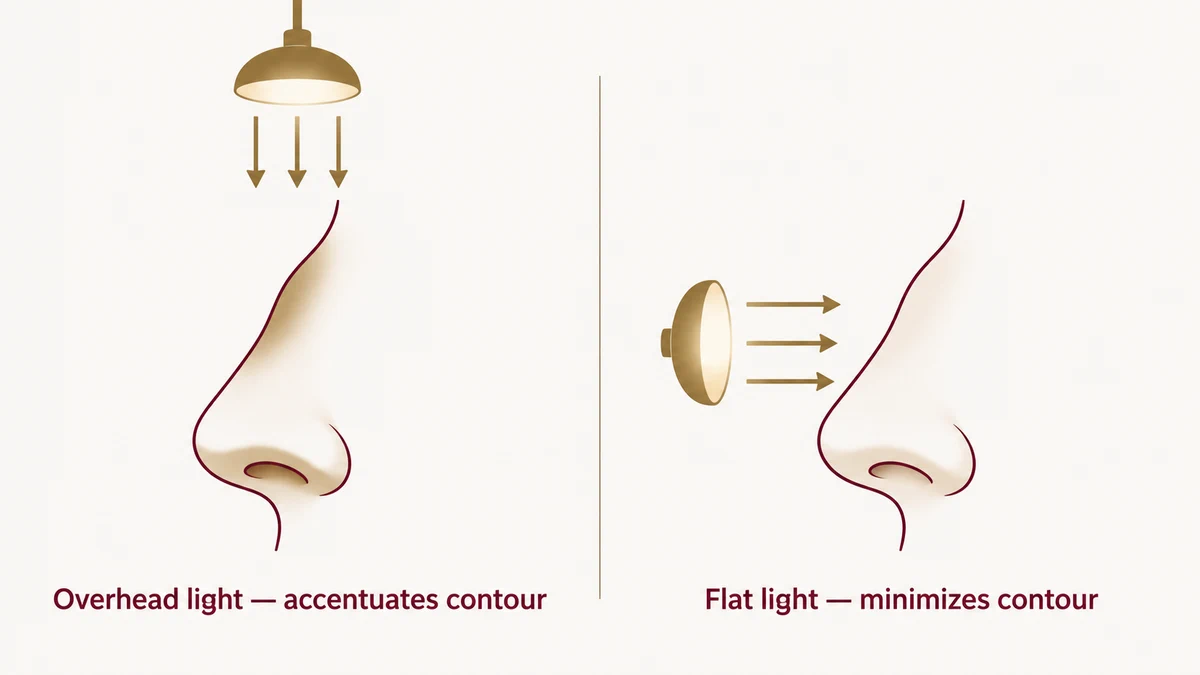
Overhead light casts a deep shadow under heavy breasts and in the crease, exaggerating sag in a "before" image. Flat, frontal light in an "after" image smooths contour and also washes out scars. Look for the same light source, background and camera setup in both photos. If scars seem to have almost vanished at three months, check whether the lighting changed.
Timing
Every "after" photo should state how long after surgery it was taken. Early photos show smaller but swollen, high-riding breasts and fresh, red scars; photos at a year or more show the settled shape and maturing scars. The best galleries show the same patient at several time points.
Bra, clothing and framing
A braless "before" next to an "after" in a supportive bra or bikini top is not a fair comparison of shape. Neither is an "after" that is cropped tightly, hiding the crease where the anchor scar sits, or one where the arms cover the outer breast. Look for the same unclothed framing in both images, for example from the base of the neck to the upper abdomen.
Weight change
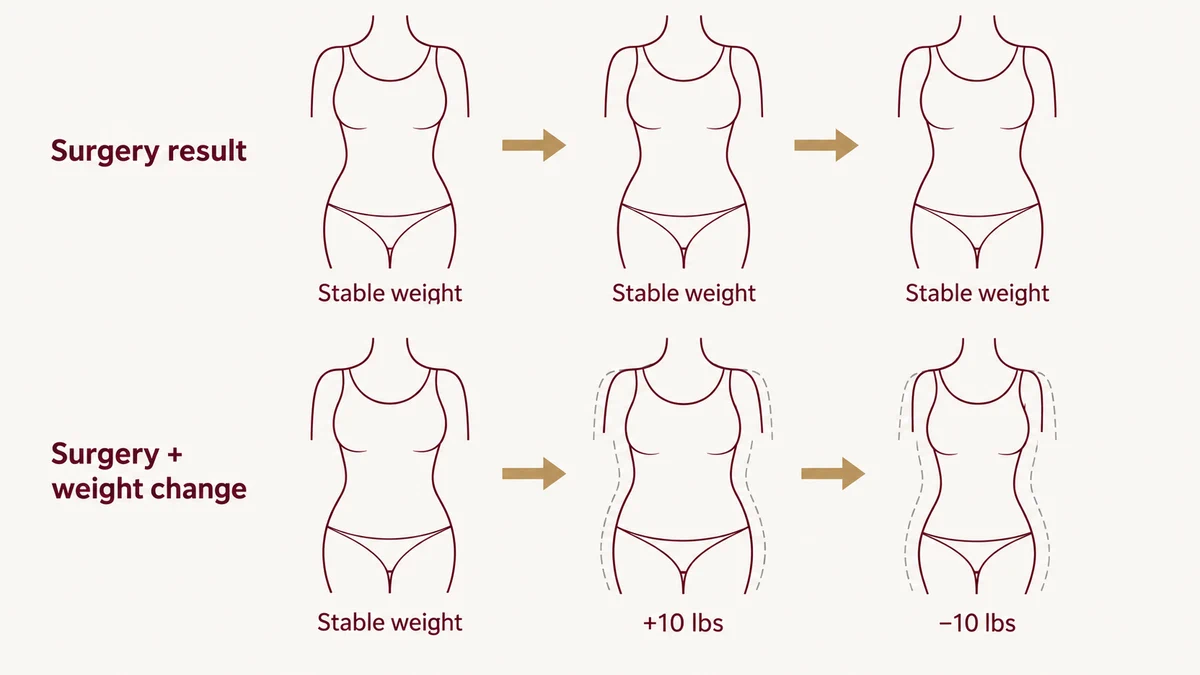
Because the remaining breast still responds to body weight,1 a patient who lost weight between photos will look like she had a bigger reduction than she did, and one who gained weight may look under-reduced. Compare the waist, arms and face in both images; if they look different, weight has changed and the breast comparison is less reliable.
Find patients like you
The most useful photos show a patient with a similar starting size, frame, skin quality and degree of sag to yours, and a planned scar pattern similar to what you have been offered. A dramatic reduction on a very different body does not predict your result. You can browse our before-and-after hub for photo-reading guides to other procedures.
Frequently Asked Questions
Will my breasts look smaller right after a breast reduction?
Yes, the size change is visible immediately because tissue and skin are removed during surgery. The shape is a different story: early on the breasts often sit high and look firm and swollen, and they usually soften and settle into their longer-term shape over the following months.
How long until I see my final breast reduction result?
Size is clear from the start, but shape usually takes several months to settle as swelling resolves. Scars take longer still: they tend to look their most noticeable around two to three months, improve noticeably by about a year, and keep maturing for up to two years.
Are breast reduction scars permanent?
Yes. Incision lines are permanent, but in most cases they fade over time. Vertical (lollipop) scars run around the areola and down to the breast crease; anchor scars add a horizontal line in the crease. Most of that horizontal line sits in the fold, where it is less visible when standing.
Can I breastfeed after a breast reduction?
Many people can, but it depends heavily on technique. A systematic review found breastfeeding success was much higher when the column of tissue beneath the nipple was preserved than when it was not. If you may want to breastfeed, ask your surgeon which technique they plan and how it affects that column.
Can breasts grow back after a reduction?
Removed tissue does not regrow, but the remaining breast tissue still responds to weight gain, pregnancy, hormonal changes, aging and gravity. Breasts can therefore change size and shape again over the years, which is why a stable weight helps preserve the result.
Why do breast reduction photos online look so different from each other?
Because pose, lighting, camera distance, timing after surgery, bra or no bra, and weight change between photos all alter how a result looks. Photos taken in a standardized way, at a stated time point, on a patient with a starting size similar to yours tell you far more than a dramatic single pair.