Eyelid Plastic Surgery (Blepharoplasty): Upper, Lower & Recovery
The eyes are often among the first facial features to show signs of aging. Even individuals who maintain healthy lifestyles and excellent skincare habits may eventually notice sagging upper eyelids, under-eye bags, excess skin, puffiness, or a tired appearance that does not reflect how they actually feel.
Because the skin around the eyes is thinner and more delicate than other areas of the face, age-related changes can become noticeable earlier. In some cases, these changes are purely cosmetic. In others, excess upper eyelid skin may begin interfering with vision and daily activities.
Eyelid plastic surgery, medically known as blepharoplasty, is one of the most effective facial rejuvenation procedures for addressing these concerns. Whether performed on the upper eyelids, lower eyelids, or both, blepharoplasty can help create a more rested, refreshed, and youthful appearance.
Patients exploring eye and brow rejuvenation options often discover that eyelid surgery provides improvements that creams, injectables, and non-surgical treatments cannot fully achieve.
What Is Eyelid Surgery?
Blepharoplasty is a surgical procedure designed to improve the appearance of the upper eyelids, lower eyelids, or both.
The procedure may involve:
- Removing excess skin
- Repositioning or removing fat deposits
- Tightening supportive tissues
- Improving eyelid contours
- Correcting puffiness and bags under the eyes
Unlike procedures that primarily address wrinkles or skin texture, blepharoplasty focuses on structural concerns that contribute to an aged or fatigued appearance.
The goal is not to change the shape of the eyes dramatically but rather to restore a more youthful and rested appearance.
Why Do Eyelids Age?
Aging affects the eyelids in several ways.
Skin Laxity
As collagen and elastin production decreases, the eyelid skin gradually loses elasticity.
This can lead to:
- Drooping upper eyelids
- Crepey skin
- Wrinkles around the eyes
- Hooding of the upper eyelids
Fat Redistribution
The fat that normally supports the eyes may shift over time.
This can create:
- Puffy upper eyelids
- Under-eye bags
- Bulging lower eyelids
Muscle Weakening
Supporting structures around the eyes may weaken as part of the natural aging process.
Combined with skin laxity and fat changes, this can contribute to a tired appearance.
Genetics
Some individuals develop under-eye bags or drooping eyelids relatively early due to inherited facial characteristics.
In these cases, blepharoplasty may be considered even at younger ages.
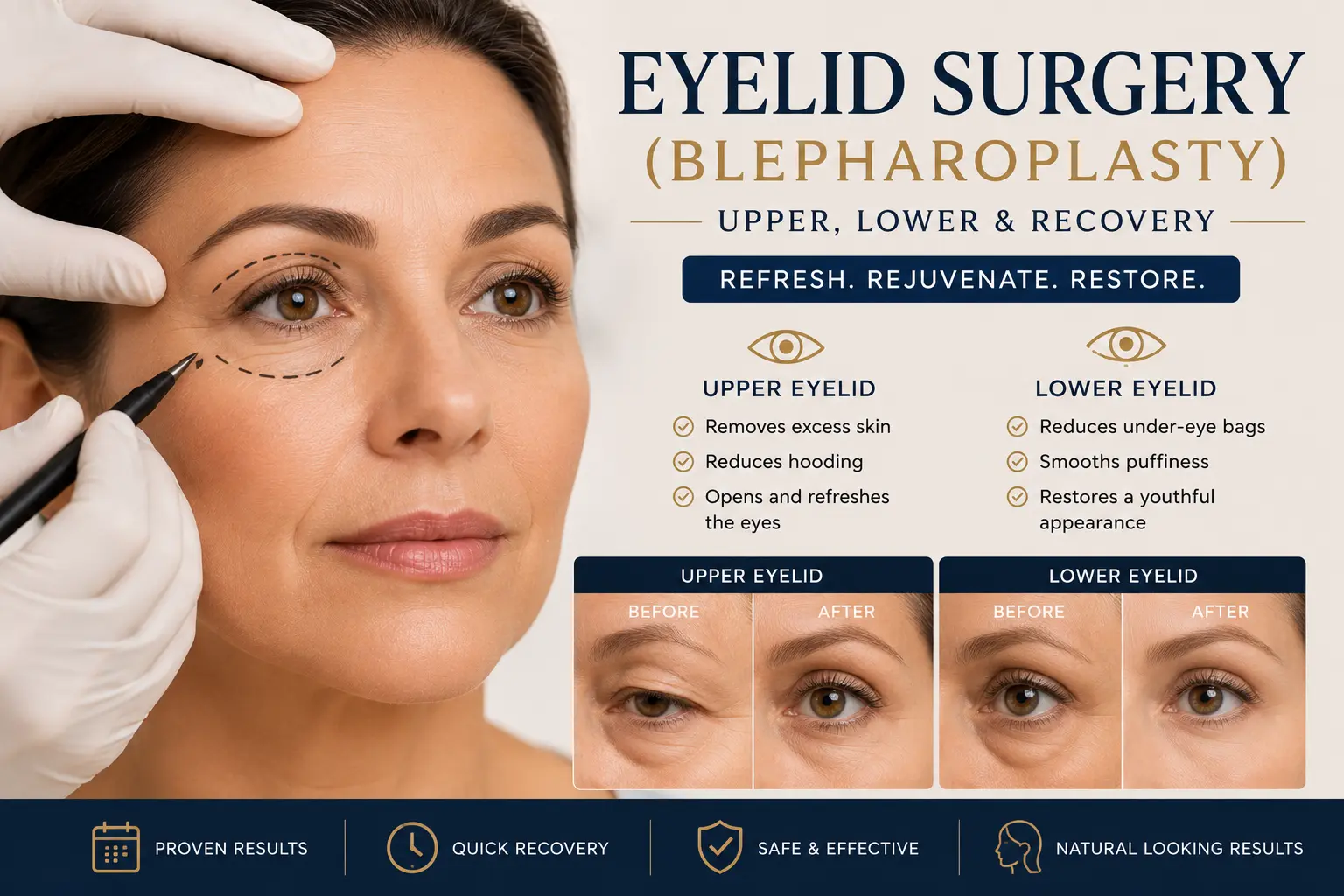
Upper Eyelid Surgery
Upper blepharoplasty focuses on correcting excess skin and tissue affecting the upper eyelids.
Common Concerns Treated
Upper eyelid surgery may improve:
- Hooded eyelids
- Excess skin folds
- Heaviness above the eyes
- A tired appearance
- Obstructed peripheral vision in selected patients
How Upper Blepharoplasty Is Performed
The surgeon typically places an incision within the natural crease of the eyelid.
This allows excess skin and tissue to be removed while helping scars remain well concealed after healing.
Because the incision follows a natural crease, scars often become difficult to notice over time.
Functional Benefits
Although many patients seek surgery for cosmetic reasons, some individuals pursue upper blepharoplasty because excess skin interferes with vision.
In such cases, the procedure may offer both cosmetic and functional benefits.
Lower Eyelid Surgery
Lower blepharoplasty addresses aging changes beneath the eyes.
Common Concerns Treated
Lower eyelid surgery may improve:
- Under-eye bags
- Puffiness
- Fat bulges
- Loose lower eyelid skin
- Hollow under-eye appearance
Surgical Techniques
Depending on anatomy and treatment goals, surgeons may:
- Remove excess fat
- Reposition fat
- Tighten tissues
- Remove excess skin
The goal is to create smoother transitions between the lower eyelids and cheeks while maintaining a natural appearance.
Patients concerned about severe under-eye aging often achieve more meaningful improvement through surgery than through non-invasive treatments alone.
Upper vs Lower Blepharoplasty
Although often grouped together, upper and lower eyelid surgeries address different concerns.
Upper Eyelid Surgery
Primarily treats:
- Excess skin
- Hooding
- Visual obstruction
- Upper eyelid heaviness
Lower Eyelid Surgery
Primarily treats:
- Under-eye bags
- Puffiness
- Loose lower eyelid skin
- Aging beneath the eyes
Many patients choose to combine both procedures for more comprehensive rejuvenation.
Combining Blepharoplasty With Other Procedures
Eyelid surgery is frequently performed alongside other facial rejuvenation procedures.
One of the most common combinations involves combining with a facelift to address aging in both the upper and lower face simultaneously.
Additional procedures may include:
- Facelift surgery
- Brow lift procedures
- Fat transfer
- Skin resurfacing
- Neck rejuvenation
Combining procedures often produces more balanced and harmonious facial rejuvenation.
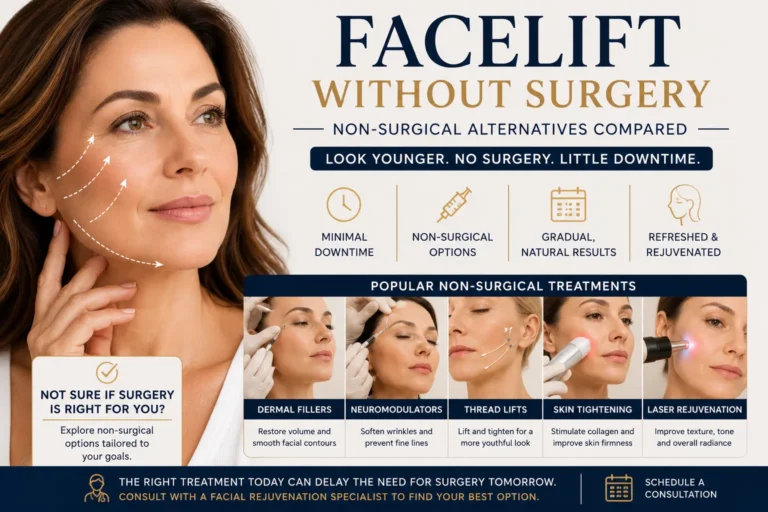
Can Non-Surgical Treatments Replace Eyelid Surgery?
Many patients hope to avoid surgery if possible.
Non-surgical treatments can improve certain concerns, but their capabilities are limited.
Patients exploring non-surgical eye treatments should understand that injectables, lasers, and skin tightening devices generally cannot remove excess skin or eliminate significant under-eye bags.
These treatments may help:
- Fine lines
- Mild volume loss
- Skin texture
- Minor laxity
However, patients with substantial skin excess or fat protrusion often achieve superior results through blepharoplasty.
Recovery After Eyelid Surgery
Recovery is generally easier than many patients expect.
However, understanding the healing process remains important.
First Week
Most patients experience:
- Swelling
- Bruising
- Mild discomfort
- Temporary dryness
- Increased tearing
- Tightness around the eyes
Cold compresses and proper postoperative care help manage these symptoms.
Managing Early Swelling
One of the most important aspects of recovery involves reducing post-op swelling and bruising.
Patients are commonly advised to:
- Keep the head elevated
- Use cold compresses
- Avoid strenuous activity
- Follow postoperative instructions carefully
These measures can help improve comfort and support healing.
Weeks Two Through Four
Bruising and swelling typically improve substantially.
Many patients feel comfortable returning to social activities during this period.
Incisions continue healing, and the eyes begin appearing more refreshed.
Long-Term Healing
Final results continue developing as residual swelling resolves.
Most scars become increasingly difficult to notice over time.
Patience is important because subtle improvements may continue for several months.
Risks and Potential Complications
Like any surgical procedure, blepharoplasty carries risks.
Potential complications may include:
- Infection
- Bleeding
- Dry eyes
- Excessive tearing
- Temporary blurred vision
- Scarring
- Asymmetry
- Difficulty fully closing the eyes
- Changes in eyelid position
- Need for revision surgery
Although serious complications are uncommon, patients should understand these possibilities before proceeding.
How Surgeons Reduce Risk
Risk reduction strategies typically include:
- Careful patient evaluation
- Detailed surgical planning
- Conservative tissue removal
- Thorough postoperative instructions
- Regular follow-up visits
Choosing an experienced facial plastic surgeon is one of the most important factors in achieving safe and predictable results.
How Long Do Eyelid Surgery Results Last?
Blepharoplasty can provide long-lasting improvement.
While the procedure cannot stop the natural aging process, many patients enjoy results for years.
Factors influencing longevity include:
- Genetics
- Skin quality
- Sun exposure
- Lifestyle habits
- Smoking status
Maintaining healthy skincare and sun protection habits may help preserve results longer.
Eyelid Surgery Costs
The cost of blepharoplasty varies depending on:
- Upper vs lower eyelid surgery
- Surgeon experience
- Geographic location
- Facility fees
- Anesthesia costs
- Combined procedures
Because treatment plans are customized, consultations remain the most reliable way to obtain accurate pricing information.
Patients should prioritize safety, expertise, and natural-looking outcomes rather than focusing solely on cost.
Final Thoughts
Eyelid surgery is one of the most effective procedures for addressing drooping upper eyelids, under-eye bags, and other signs of aging around the eyes. Whether performed for cosmetic enhancement or functional improvement, blepharoplasty can help create a more refreshed and youthful appearance while maintaining natural facial expression. Discuss best eyelid plastic surgery options for you.
The best candidates are healthy individuals with realistic expectations who wish to address structural aging changes that cannot be corrected through skincare products or non-surgical treatments alone.
Medical Disclaimer
The information provided in this article is for educational and informational purposes only and should not be considered medical advice. Plastic surgery procedures, recovery experiences, risks, and outcomes vary from person to person. Reading this content does not establish a doctor-patient relationship.
Anyone considering cosmetic or reconstructive surgery should consult with a qualified healthcare professional or board-certified plastic surgeon for personalized evaluation, diagnosis, and treatment recommendations. Never disregard professional medical advice or delay seeking medical care based on information found online.