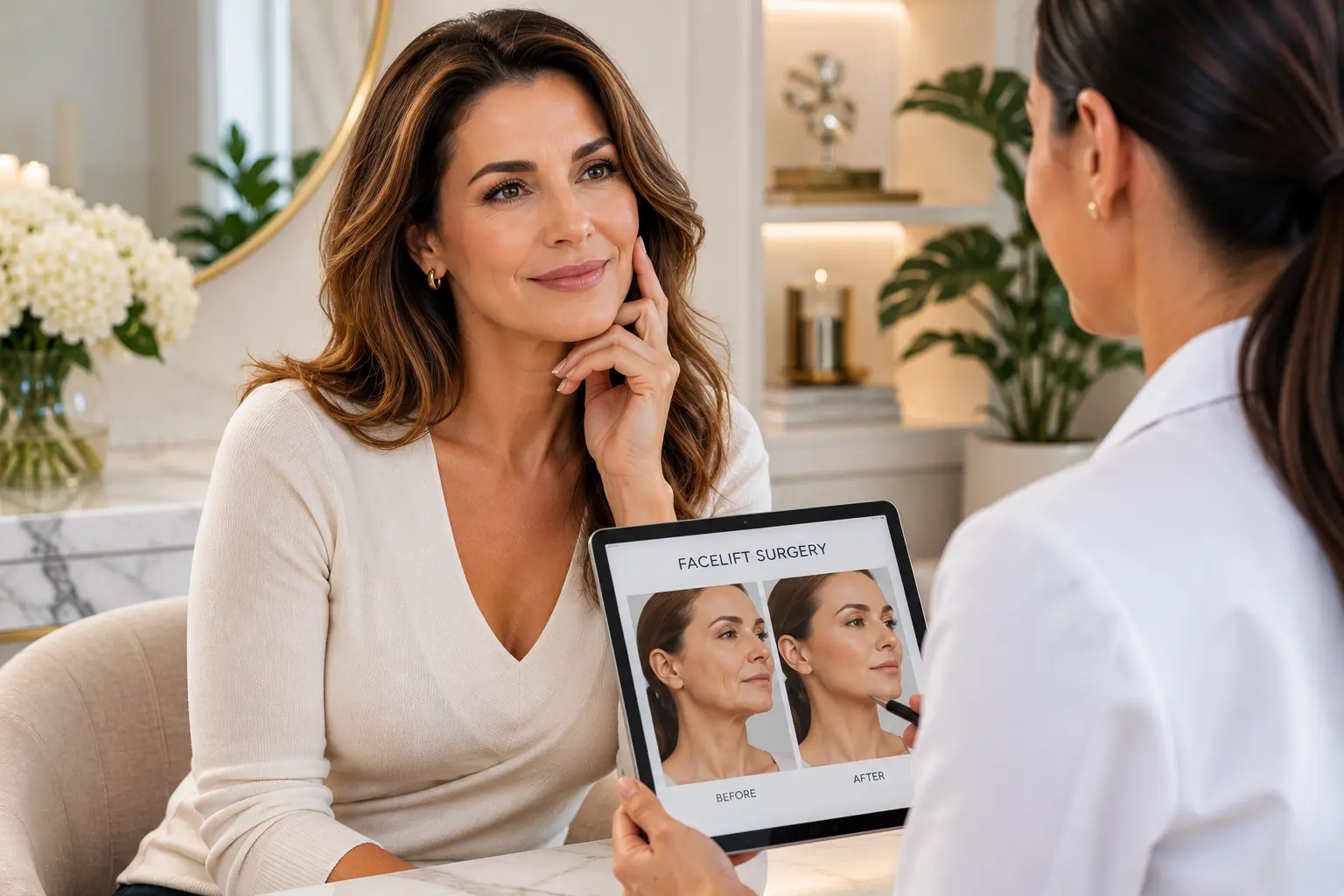
Facelift Surgery: Procedure, Types, and Results to Expect
Facelift surgery remains one of the most effective procedures for addressing visible signs of facial aging. While modern skincare products, injectable treatments, and non-surgical procedures can improve certain concerns, they cannot reposition sagging tissues or correct significant skin laxity in the same way surgery can.
As we age, the face naturally undergoes structural changes. Skin loses elasticity, collagen production declines, facial fat shifts downward, and deeper support structures begin to weaken. These changes can contribute to jowls, deep folds around the mouth, loose skin along the jawline, and a tired or aged appearance that may not reflect how a person feels internally.
For patients seeking more comprehensive and longer-lasting improvements, facial rejuvenation surgery may offer solutions that non-surgical treatments cannot achieve. Understanding how facelift surgery works, who may benefit, and what recovery involves is essential before making a treatment decision.
What Is a Facelift?
A facelift, medically known as rhytidectomy, is a surgical procedure designed to reduce visible signs of aging in the lower face and neck by lifting and repositioning underlying tissues while removing excess skin.
Contrary to common misconceptions, modern facelift surgery is not simply about pulling skin tighter. Contemporary techniques focus on restoring natural facial contours by addressing deeper support structures beneath the skin.
A facelift may improve:
- Sagging cheeks
- Jowls along the jawline
- Deep nasolabial folds
- Loose skin in the lower face
- Neck laxity
- Loss of facial definition
The goal is to create a refreshed and natural appearance rather than an artificial or overly tightened look.
Why Does Facial Aging Occur?
Facial aging results from a combination of biological and environmental factors.
Loss of Skin Elasticity
As collagen and elastin production decreases, the skin becomes less capable of maintaining firmness and resilience.
This contributes to:
- Fine lines
- Wrinkles
- Loose skin
- Reduced skin quality
Volume Loss
Facial fat naturally decreases and shifts downward with age.
This can create:
- Hollow cheeks
- Deep facial folds
- Loss of youthful contours
Structural Changes
Aging affects not only the skin but also the deeper tissues that support facial structure.
Ligaments loosen and soft tissues descend, creating visible sagging around the cheeks, jawline, and neck.
Lifestyle Factors
Several external factors may accelerate aging, including:
- Sun exposure
- Smoking
- Poor nutrition
- Chronic stress
- Environmental damage
Although these factors contribute to aging, surgery can often address many of the visible changes they create.
Who Is a Good Candidate for Facelift Surgery?
Ideal candidates are individuals who wish to address moderate to significant facial aging while maintaining realistic expectations.
You may be a good candidate if you:
- Have visible facial sagging
- Notice jowls or loss of jawline definition
- Have loose skin around the neck
- Are in good overall health
- Do not smoke or are willing to stop smoking
- Maintain realistic expectations
Age alone does not determine candidacy. Some individuals seek treatment in their forties, while others pursue surgery later in life depending on the severity of aging changes.
Types of Facelift Procedures
Facelift surgery is not a one-size-fits-all procedure. Different techniques exist depending on a patient’s anatomy, goals, and degree of aging.
Mini Facelift
A mini facelift focuses on early signs of aging and generally involves smaller incisions and less extensive tissue repositioning.
It may be appropriate for patients with:
- Mild jowling
- Early facial sagging
- Minimal neck laxity
Recovery is often somewhat shorter compared to more extensive procedures.
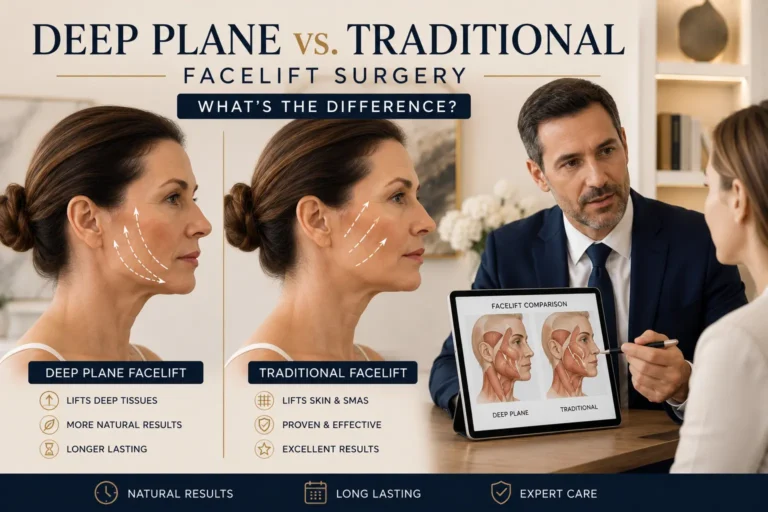
Traditional Facelift
A traditional facelift addresses more advanced aging concerns involving the cheeks, jawline, and neck.
Benefits may include:
- Significant facial rejuvenation
- Improved jawline definition
- Reduction of jowls
- Enhanced neck contour
Deep Plane Facelift
Many patients researching facelift procedures eventually encounter the deep plane technique, which has gained attention for its ability to reposition deeper facial tissues rather than focusing primarily on the skin.
This approach may provide:
- More comprehensive lifting
- Natural-looking movement
- Long-lasting results
- Improved midface rejuvenation
The appropriate technique depends on individual anatomy and surgical goals.
Areas a Facelift Can Improve
Modern facelift surgery often addresses multiple aspects of facial aging simultaneously.
Midface Aging
A facelift can help reposition descended cheek tissues and improve facial contours.
Jawline Definition
One of the most common motivations for surgery is restoring a more defined jawline.
Jowls
Excess tissue along the lower face can often be improved significantly through surgical lifting.
Neck Contour
Many facelift procedures include treatment of the neck to create a more harmonious and balanced result.
Addressing only one area may leave other signs of aging untreated, which is why comprehensive planning is important.
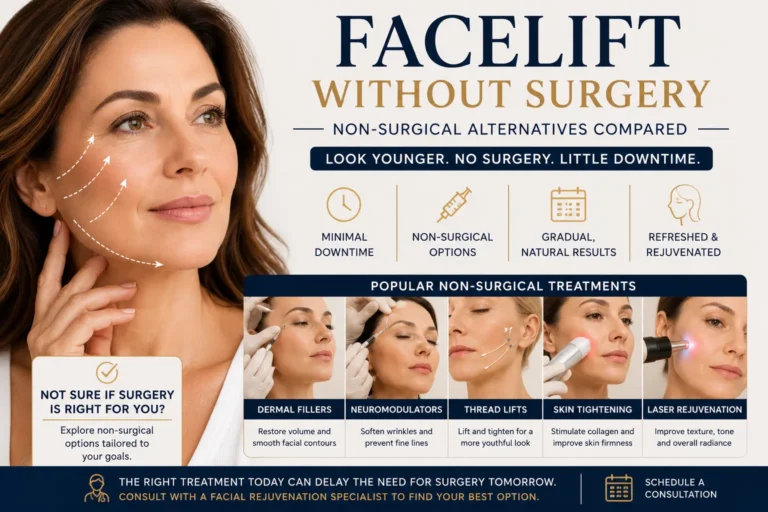
Facelift vs Non-Surgical Treatments
Patients frequently ask whether surgery is truly necessary.
While non-surgical treatments can offer meaningful improvements, they have limitations.
Injectable Treatments
Fillers and neuromodulators may help:
- Restore volume
- Reduce wrinkles
- Improve facial balance
However, they do not remove excess skin or reposition descended tissues.
Skin Tightening Procedures
Various energy-based treatments can provide mild improvement for selected patients.
However, individuals with significant skin laxity often find that non-surgical lifting options cannot match the results achievable through surgery.
When Surgery Becomes the Better Option
Patients with moderate to severe facial aging generally achieve more dramatic and longer-lasting improvements through surgical treatment.
Combining Facelift Surgery With Other Procedures
Many patients choose to combine procedures to create more comprehensive facial rejuvenation.
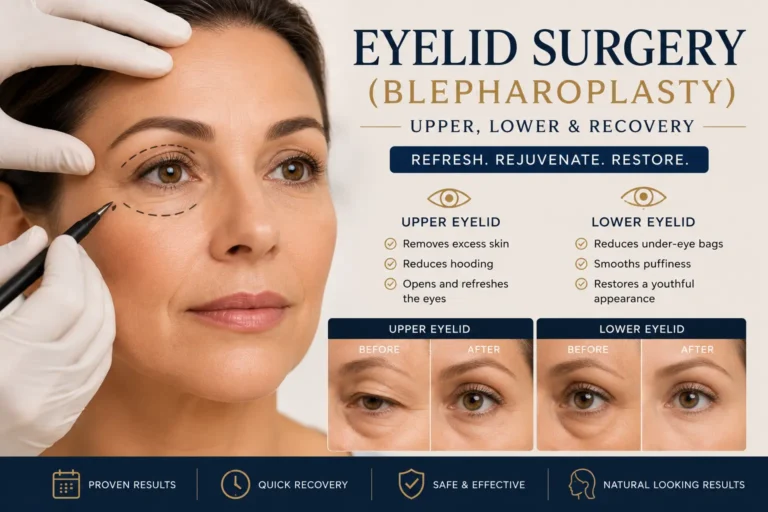
One common option involves pairing with eyelid surgery to address aging changes around the eyes while simultaneously improving the lower face and neck.
Additional procedures may include:
- Eyelid surgery (blepharoplasty)
- Brow lift procedures
- Fat transfer
- Skin resurfacing treatments
Combining procedures can improve overall harmony and reduce the need for multiple separate recovery periods.
What Happens During Surgery?
Facelift surgery is typically performed under general anesthesia or intravenous sedation.
The procedure generally involves:
- Carefully placed incisions
- Repositioning of underlying tissues
- Removal of excess skin
- Refinement of facial contours
- Closure using meticulous surgical techniques
The exact surgical plan varies according to the chosen technique and individual anatomy.
Recovery After Facelift Surgery
Recovery is an important part of the facelift journey.
Understanding what to expect helps patients prepare appropriately.
First Week
Patients commonly experience:
- Swelling
- Bruising
- Tightness
- Mild discomfort
- Temporary numbness
Most patients spend this period resting and limiting activities.
Weeks Two Through Four
Visible bruising and swelling gradually improve.
Many individuals begin returning to social activities and work depending on their healing progress.
One to Three Months
Facial contours continue refining as swelling resolves.
Most patients begin seeing increasingly natural results during this period.
Long-Term Healing
Final results may continue improving for several months.
Incisions typically become less noticeable as healing progresses.
Risks and Potential Complications
Like any surgical procedure, facelift surgery carries potential risks.
These may include:
- Infection
- Bleeding
- Hematoma
- Delayed wound healing
- Temporary or permanent nerve injury
- Changes in skin sensation
- Hair loss near incisions
- Scarring
- Asymmetry
- Need for revision surgery
Although serious complications are relatively uncommon, patients should understand these possibilities before proceeding.
How Surgeons Reduce Risk
Risk reduction strategies typically include:
- Comprehensive medical evaluation
- Careful surgical planning
- Smoking cessation
- Accredited surgical facilities
- Detailed postoperative instructions
- Close follow-up monitoring
Following recovery instructions carefully plays a major role in successful healing.
How Long Do Facelift Results Last?
Facelift surgery cannot stop the aging process, but it can significantly reset the clock.
Many patients enjoy improvements that remain noticeable for years.
Factors affecting longevity include:
- Skin quality
- Genetics
- Sun exposure
- Smoking status
- Lifestyle habits
- Surgical technique
Maintaining a healthy lifestyle can help preserve results longer.
Facelift Costs
Pricing varies depending on:
- Surgeon expertise
- Geographic location
- Procedure complexity
- Facility fees
- Anesthesia costs
- Additional procedures performed
A consultation is the most accurate way to obtain personalized pricing information.
Patients should prioritize safety, qualifications, and experience rather than choosing a surgeon based solely on cost.
Final Thoughts
Facelift surgery remains one of the most effective options for addressing significant facial aging. By repositioning deeper tissues, improving facial contours, and reducing excess skin, modern facelift techniques can create natural-looking rejuvenation that lasts far longer than most non-surgical alternatives.
The best candidates are healthy individuals with realistic expectations who seek meaningful improvements in facial aging. Schedule a facelift consultation with an experienced facial plastic surgeon can help determine which facelift approach is most appropriate for your anatomy and goals.
Medical Disclaimer
The information provided in this article is for educational and informational purposes only and should not be considered medical advice. Plastic surgery procedures, recovery experiences, risks, and outcomes vary from person to person. Reading this content does not establish a doctor-patient relationship.
Anyone considering cosmetic or reconstructive surgery should consult with a qualified healthcare professional or board-certified plastic surgeon for personalized evaluation, diagnosis, and treatment recommendations. Never disregard professional medical advice or delay seeking medical care based on information found online.