Deep Plane Facelift Surgery vs. Traditional: What’s the Difference?
Patients researching facelift surgery often encounter terms such as “deep plane facelift,” “SMAS facelift,” and “traditional facelift.” While all facelift procedures aim to reduce visible signs of facial aging, they differ significantly in how they approach the deeper facial structures that contribute to sagging, jowls, and loss of definition.
Over the past decade, deep plane facelift surgery has gained considerable attention among both surgeons and patients. Advocates of the technique often describe it as a more advanced approach capable of creating natural-looking rejuvenation while addressing deeper causes of facial aging.
However, this does not necessarily mean that every patient needs a deep plane facelift. The ideal technique depends on anatomy, goals, age-related changes, and surgeon expertise.
For individuals exploring advanced face lift methods, understanding the differences between deep plane and traditional facelift procedures is essential before making treatment decisions.
Understanding Facial Aging
Before comparing facelift techniques, it helps to understand why the face ages in the first place.
Facial aging occurs at multiple levels.
Changes may include:
- Skin laxity
- Collagen loss
- Volume loss
- Descent of facial fat pads
- Weakening of connective tissues
- Development of jowls
- Neck laxity
Because aging affects structures beneath the skin, modern facelift techniques increasingly focus on deeper tissue repositioning rather than simply tightening the skin surface.
This shift is one of the primary reasons deep plane facelift surgery has become more popular.
What Is a Traditional Facelift?
A traditional facelift is one of the most established facial rejuvenation procedures.
Modern traditional facelifts typically address both the skin and the superficial musculoaponeurotic system (SMAS), which is a layer of tissue beneath the skin that plays an important role in facial support.
Patients unfamiliar with facelift fundamentals are often surprised to learn that most modern facelift procedures already address deeper structures rather than simply pulling skin tighter.
How a Traditional Facelift Works
During surgery, the surgeon:
- Creates carefully placed incisions
- Elevates the skin
- Repositions or tightens the SMAS layer
- Removes excess skin
- Improves facial contours
The exact technique varies between surgeons, but the primary goal is to create a younger and more refreshed appearance.
Areas Commonly Improved
Traditional facelifts can effectively address:
- Jowls
- Jawline laxity
- Neck aging
- Lower facial sagging
- Excess skin
For many patients, these improvements provide substantial rejuvenation with long-lasting results.
What Is a Deep Plane Facelift?
A deep plane facelift takes tissue repositioning one step further.
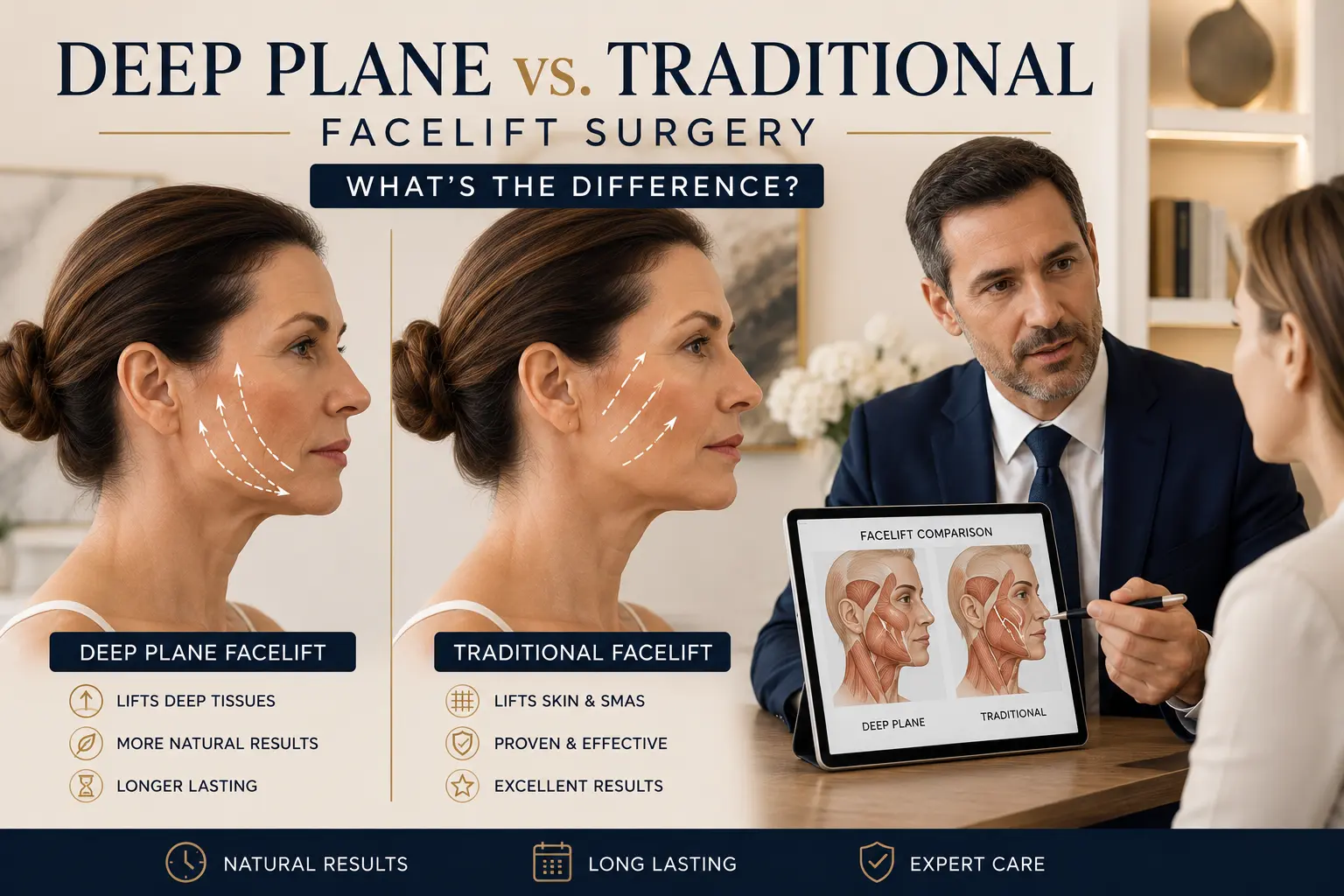
Rather than separating the skin from underlying structures to the same extent as traditional methods, the surgeon lifts and repositions deeper facial tissues while maintaining important anatomical connections.
The technique allows the skin, fat, and underlying support structures to move together as a single unit.
Why Is It Called “Deep Plane”?
The name refers to the anatomical layer where the surgeon performs the dissection.
By working in a deeper plane beneath the SMAS layer, surgeons can mobilize facial tissues more extensively and address some of the structural changes associated with aging.
Areas Commonly Improved
Deep plane facelifts may provide particularly noticeable improvement in:
- Midface aging
- Nasolabial folds
- Jowls
- Jawline definition
- Neck contour
Because deeper tissues are repositioned rather than merely tightened, proponents often argue that results appear more natural.
Key Differences Between Deep Plane and Traditional Facelifts
Although both procedures share the same overall goal, several important distinctions exist.
Tissue Repositioning
Traditional facelift techniques generally reposition skin and SMAS structures through tightening and elevation.
Deep plane facelifts reposition facial tissues as a connected unit, allowing more extensive movement of deeper structures.
Midface Rejuvenation
One area where deep plane procedures may offer advantages is the midface.
Patients with significant cheek descent often experience more noticeable correction because deeper tissues can be repositioned more directly.
Nasolabial Fold Improvement
The folds running from the nose to the corners of the mouth are among the most difficult signs of aging to address.
Deep plane techniques may improve these folds more effectively in selected patients.
Natural Facial Movement
Supporters of deep plane facelifts often emphasize the ability to maintain natural facial movement because tissues are repositioned rather than excessively tightened.
However, natural-looking outcomes depend heavily on surgical technique regardless of the specific facelift method used.
Is a Deep Plane Facelift Better?
This is one of the most frequently asked questions.
The answer is not always straightforward.
Potential Advantages of Deep Plane Facelifts
Potential benefits may include:
- More extensive tissue repositioning
- Improved midface rejuvenation
- Better correction of deep folds
- Natural facial contours
- Long-lasting results
These potential benefits explain why many surgeons discuss deep plane benefits when evaluating facelift candidates.
Potential Advantages of Traditional Facelifts
Traditional facelift techniques also offer significant advantages.
These may include:
- Proven long-term track record
- Effective lower face rejuvenation
- Excellent jawline improvement
- Predictable outcomes
- Broad surgeon familiarity
For many patients, traditional facelift surgery can produce outstanding results without requiring more advanced techniques.
Who Is a Good Candidate for a Deep Plane Facelift?
Deep plane facelifts may be particularly attractive for patients who have:
- Significant midface descent
- Prominent nasolabial folds
- Moderate to advanced facial aging
- Loss of cheek support
- Jowling and neck laxity
Patients seeking comprehensive facial rejuvenation often discuss this option during consultation.
However, candidacy ultimately depends on anatomy rather than marketing claims.
Can Deep Plane Facelifts Be Combined With Other Procedures?
Absolutely.
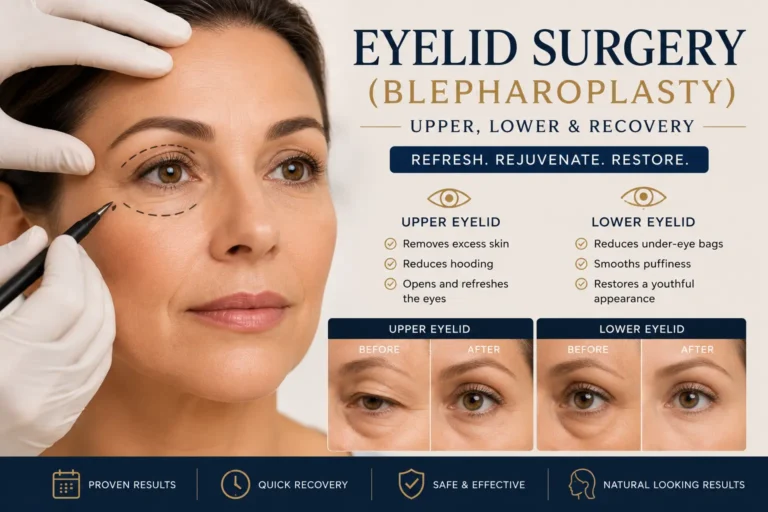
Many patients combine facelift surgery with eyelid rejuvenation procedures to address aging around the eyes while improving facial contours.
Additional complementary treatments may include:
- Eyelid surgery
- Brow lifts
- Fat transfer
- Skin resurfacing
- Neck contouring procedures
Combining procedures can often create more balanced and harmonious facial rejuvenation.
Recovery: Deep Plane vs Traditional Facelift
Recovery experiences are often more similar than many patients expect.
Both procedures involve:
- Swelling
- Bruising
- Tightness
- Temporary numbness
- Activity restrictions
Patients reviewing a typical facelift recovery timeline will find that healing stages overlap significantly between techniques.
First Week
Most swelling and bruising occur during the initial recovery period.
Patients generally spend this time resting and limiting activities.
Weeks Two Through Four
Visible bruising improves substantially.
Many individuals begin returning to social activities and work.
Several Months
Residual swelling gradually resolves.
Facial contours continue refining as tissues settle.
Final results often become increasingly natural over time.
Risks and Potential Complications
All facelift procedures carry risks.
Potential complications may include:
- Infection
- Bleeding
- Hematoma
- Delayed wound healing
- Scarring
- Temporary nerve irritation
- Permanent nerve injury
- Hair loss near incisions
- Skin irregularities
- Asymmetry
- Need for revision surgery
Deep plane procedures involve more extensive dissection, which may increase technical complexity and underscore the importance of surgeon experience.
How Risks Are Reduced
Risk reduction strategies commonly include:
- Comprehensive patient evaluation
- Careful surgical planning
- Accredited surgical facilities
- Smoking cessation
- Detailed recovery instructions
- Close postoperative monitoring
Selecting an experienced facial plastic surgeon is one of the most important factors in minimizing complications.
How Long Do Results Last?
Neither procedure permanently stops aging.
However, both techniques can provide long-lasting improvement.
Factors influencing longevity include:
- Genetics
- Skin quality
- Sun exposure
- Lifestyle habits
- Surgical technique
- Smoking status
Many patients enjoy meaningful rejuvenation for years following surgery.
Which Facelift Technique Should You Choose?
The best facelift is not necessarily the most heavily marketed one.
Instead, the ideal procedure is the one that appropriately addresses your anatomy and goals.
Some patients benefit significantly from deep plane techniques, while others achieve excellent outcomes with traditional facelift approaches.
A thorough consultation with a qualified facial plastic surgeon can help determine which method is most appropriate based on:
- Facial anatomy
- Degree of aging
- Desired outcome
- Recovery expectations
- Long-term goals
Final Thoughts
Deep plane facelift surgery and traditional facelift surgery both aim to create a younger, more refreshed appearance by addressing facial aging at deeper structural levels. While deep plane techniques have gained popularity for their ability to reposition facial tissues more extensively, traditional facelifts continue to deliver outstanding results for many patients.
The most important factor is not necessarily the name of the procedure but the experience of the surgeon, the suitability of the technique for your anatomy, and realistic expectations regarding recovery and results.
Medical Disclaimer
The information provided in this article is for educational and informational purposes only and should not be considered medical advice. Plastic surgery procedures, recovery experiences, risks, and outcomes vary from person to person. Reading this content does not establish a doctor-patient relationship.
Anyone considering cosmetic or reconstructive surgery should consult with a qualified healthcare professional or board-certified plastic surgeon for personalized evaluation, diagnosis, and treatment recommendations. Never disregard professional medical advice or delay seeking medical care based on information found online.