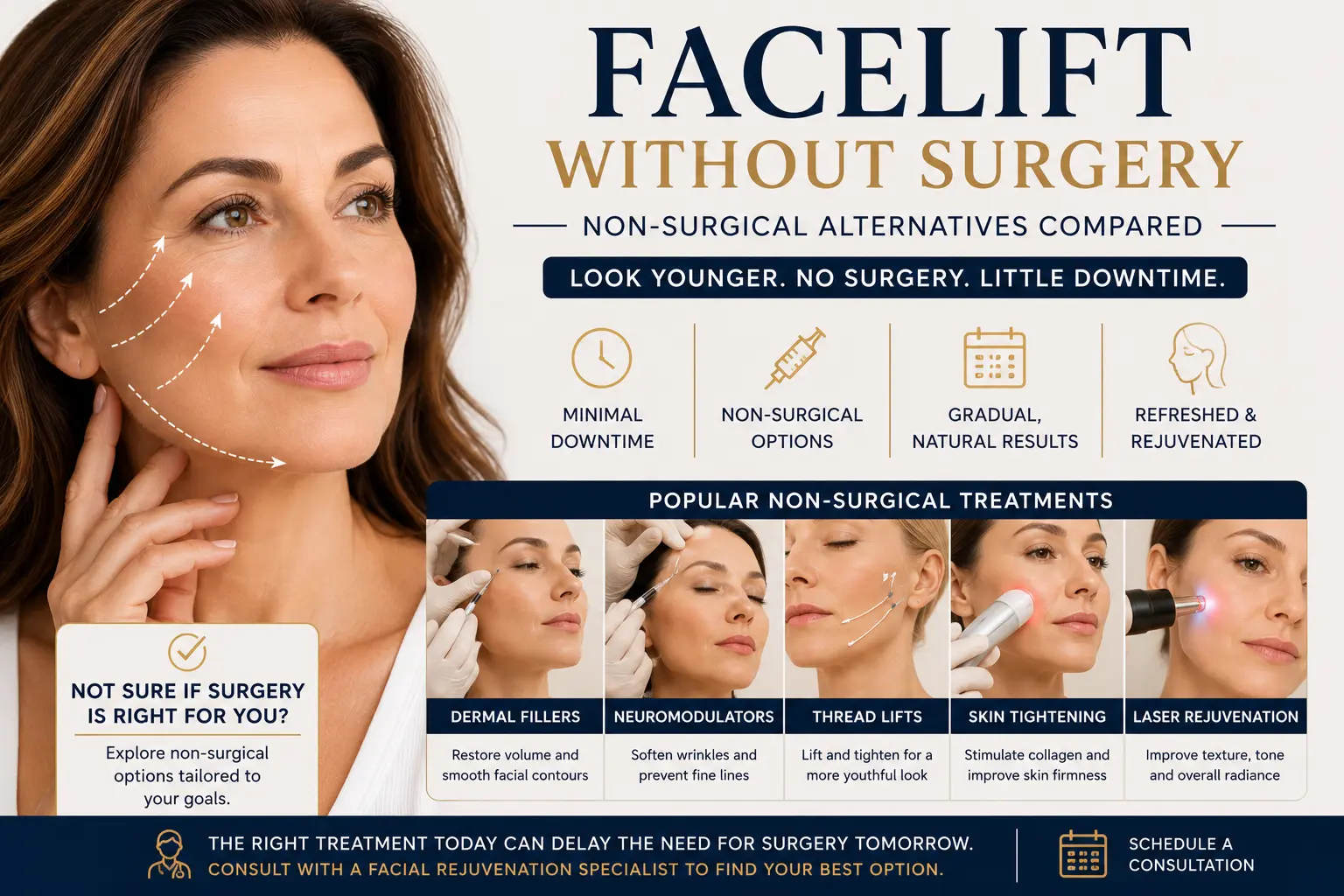
Facelift Without Surgery: Non-Surgical Alternatives Compared
Many people notice the early signs of facial aging long before they feel ready to consider surgery. Mild skin laxity, loss of facial volume, early jowls, fine lines, and reduced jawline definition often lead patients to search for ways to look younger without undergoing a surgical facelift.
As a result, interest in facelift without surgery has increased dramatically over the past decade. Today, patients can choose from a wide range of treatments designed to improve facial appearance with little or no downtime.
However, while non-surgical procedures can provide meaningful improvements for the right candidates, they also have limitations. Understanding what these treatments can realistically achieve—and what they cannot—is essential before investing time and money into facial rejuvenation.
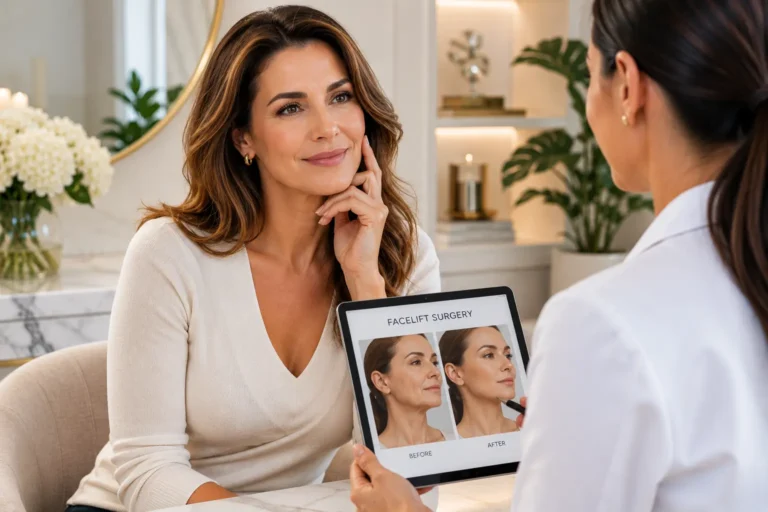
Patients considering surgical facial treatments often begin by exploring non-invasive alternatives before deciding whether surgery is necessary.
Can You Get a Facelift Without Surgery?
The answer depends on how you define a facelift.
A traditional facelift physically repositions deeper facial tissues, removes excess skin, and restores facial contours. No non-surgical treatment can fully replicate these structural changes.
However, many non-invasive and minimally invasive procedures can improve:
- Mild skin laxity
- Early jowling
- Facial volume loss
- Wrinkles
- Skin texture
- Jawline definition
For younger patients or those with mild aging concerns, these treatments may provide satisfactory results without surgery.
For patients with significant facial sagging, however, surgical procedures often remain the most effective option.
Why Patients Seek Non-Surgical Alternatives
There are many reasons why someone may prefer a non-surgical approach.
Avoiding Surgery
Some individuals are simply not comfortable with the idea of undergoing an operation.
Concerns may include:
- General anesthesia
- Surgical recovery
- Scarring
- Time away from work
Minimal Downtime
Many non-surgical treatments allow patients to return to daily activities quickly.
This makes them appealing to individuals with busy professional or personal schedules.
Earlier Signs of Aging
Patients with mild aging changes may not yet need the level of correction provided by surgery.
In these situations, non-surgical treatments can often delay the need for more invasive procedures.
Gradual Improvements
Some people prefer subtle, progressive enhancements rather than dramatic changes.
Non-surgical treatments often provide this type of gradual rejuvenation.
Dermal Fillers
Dermal fillers remain one of the most popular non-surgical facial rejuvenation options.
How Fillers Work
Fillers restore lost volume beneath the skin.
They can improve:
- Hollow cheeks
- Nasolabial folds
- Marionette lines
- Jawline contours
- Facial balance
Volume restoration often creates a more youthful appearance because facial aging is partially driven by fat loss and tissue descent.
Benefits
Advantages may include:
- Immediate results
- Minimal downtime
- Non-surgical treatment
- Natural-looking enhancement
Limitations
Fillers do not remove excess skin or reposition deeper facial tissues.
Patients with significant sagging may experience only limited improvement.
Neuromodulators (Botox and Similar Treatments)
Neuromodulators reduce muscle activity that contributes to dynamic wrinkles.
Common Treatment Areas
These injections are commonly used to improve:
- Forehead lines
- Frown lines
- Crow’s feet
Benefits
Patients often appreciate:
- Quick treatment sessions
- Minimal recovery
- Predictable wrinkle reduction
Limitations
Neuromodulators do not lift sagging tissues or address significant facial laxity.
They are most effective when used as part of a broader facial rejuvenation strategy.
Thread Lifts
Thread lifts are frequently marketed as a non-surgical facelift alternative.
How Thread Lifts Work
Specialized dissolvable threads are placed beneath the skin to provide subtle lifting and support.
The procedure may improve:
- Mild jowling
- Jawline definition
- Early facial sagging
Benefits
Potential advantages include:
- Office-based treatment
- Short recovery
- Minimal incisions
Limitations
Results are generally less dramatic and less durable than facelift surgery.
Patients with moderate or severe aging often find that thread lifts cannot achieve the degree of correction they desire.
Radiofrequency Skin Tightening
Radiofrequency treatments use controlled energy to stimulate collagen production.
Potential Benefits
These procedures may improve:
- Mild skin laxity
- Skin texture
- Fine wrinkles
- Facial firmness
Recovery
Most patients experience little downtime.
Temporary redness or swelling may occur but typically resolves quickly.
Limitations
Results develop gradually and are usually best suited for patients with mild aging concerns.
Ultrasound-Based Skin Tightening
Ultrasound technologies are designed to stimulate collagen production at deeper tissue levels.
Common Goals
Patients often pursue treatment to improve:
- Jawline definition
- Mild neck laxity
- Early facial sagging
Benefits
Advantages may include:
- No incisions
- Minimal recovery
- Gradual improvement
Limitations
Patients with advanced skin laxity generally require more substantial intervention than ultrasound treatments can provide.
Laser Rejuvenation Treatments
Laser procedures focus primarily on skin quality rather than tissue repositioning.
Common Improvements
Laser treatments may help:
- Sun damage
- Fine lines
- Pigmentation irregularities
- Skin texture concerns
Role in Facial Rejuvenation
Although lasers do not function as facelifts, they can complement other rejuvenation procedures by improving overall skin quality.
When Surgery Is the Better Option
One of the most important questions patients ask is when non-surgical treatments stop being enough.
For individuals with:
- Significant jowls
- Loose neck skin
- Advanced facial sagging
- Deep facial folds
- Substantial tissue descent
A surgical facelift often provides superior results.
Understanding when surgery is better can help patients avoid pursuing multiple non-surgical treatments that ultimately fail to address their primary concerns.
Modern facelift procedures can reposition deeper tissues in ways that non-invasive technologies simply cannot replicate.
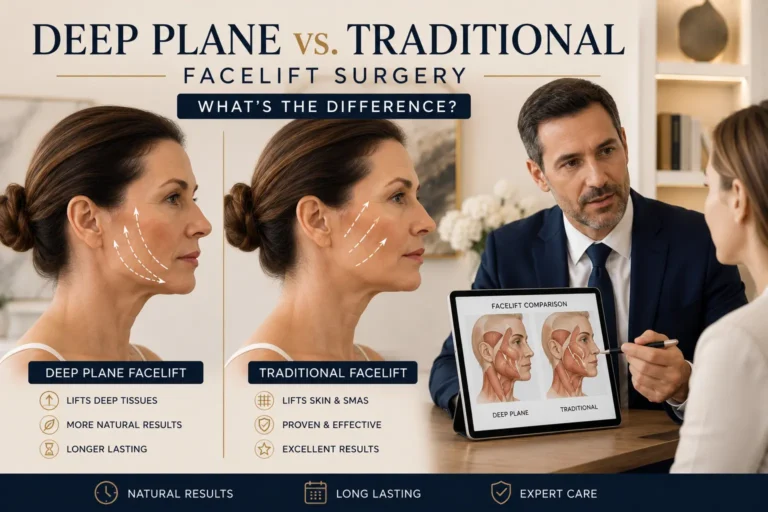
Deep Plane Facelift vs Non-Surgical Treatments
Patients researching facial rejuvenation frequently compare surgical and non-surgical approaches.
Those evaluating choosing a facelift type often discover that deep plane techniques address structural aging more comprehensively than fillers, threads, or skin tightening devices.
While non-surgical procedures may improve mild concerns, surgical approaches generally provide:
- Greater lifting
- Longer-lasting results
- More dramatic contour improvement
- Better correction of advanced aging
The appropriate approach depends on individual anatomy and goals.
Non-Surgical Alternatives Around the Eyes
The eye area often ages differently from the lower face.
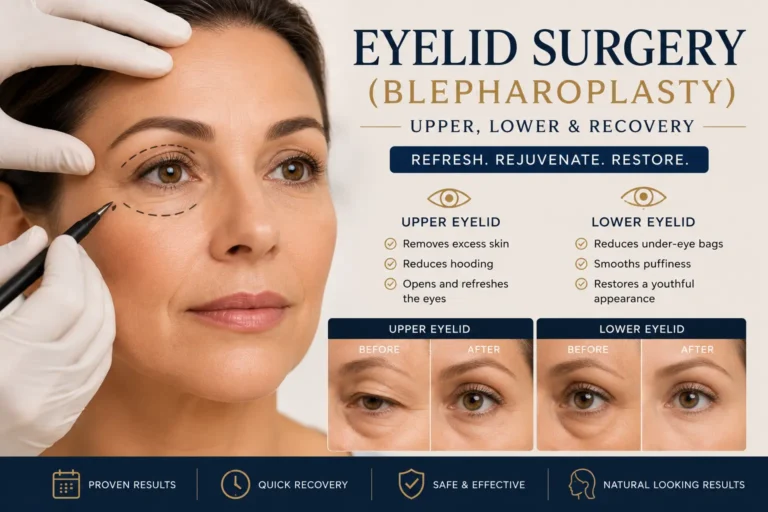
Patients researching surgical eyelid options may first explore injectables, skin tightening treatments, and lasers.
While these treatments can improve:
- Fine lines
- Skin texture
- Mild volume loss
They generally cannot remove excess eyelid skin or eliminate significant under-eye bags.
For structural eyelid aging, blepharoplasty often remains the most effective solution.
Recovery Comparison: Surgical vs Non-Surgical
Recovery is one of the primary reasons patients initially prefer non-surgical treatments.
Non-Surgical Recovery
Most treatments involve:
- Little or no downtime
- Mild swelling
- Temporary redness
- Rapid return to daily activities
Surgical Recovery
Facelift surgery typically requires:
- More recovery time
- Swelling and bruising
- Activity restrictions
- Several weeks of healing
However, surgical results are usually more dramatic and longer lasting.
Patients must balance recovery preferences with desired outcomes.
Risks and Potential Complications
Although non-surgical procedures are generally less invasive than surgery, they are not risk-free.
Potential complications vary by treatment type and may include:
Fillers
- Swelling
- Bruising
- Asymmetry
- Vascular complications
- Infection
Neuromodulators
- Temporary weakness
- Eyelid drooping
- Asymmetry
- Headaches
Thread Lifts
- Visible threads
- Infection
- Asymmetry
- Thread migration
Energy-Based Treatments
- Burns
- Pigment changes
- Swelling
- Skin irritation
Patients should seek treatment from qualified and experienced providers regardless of the procedure selected.
How Long Do Non-Surgical Results Last?
Longevity varies considerably.
Approximate timelines may include:
- Neuromodulators: several months
- Fillers: six months to two years
- Thread lifts: one to two years
- Skin tightening treatments: variable results
Unlike surgery, most non-surgical treatments require ongoing maintenance to preserve results.
This ongoing maintenance should be considered when evaluating long-term costs.
Are Non-Surgical Treatments Worth It?
For the right candidate, absolutely.
Patients with mild aging concerns often achieve satisfying improvements without surgery.
However, realistic expectations are essential.
Non-surgical treatments can improve appearance, but they cannot fully replicate the structural changes achieved through facelift surgery.
The most successful outcomes occur when patients select treatments that appropriately match the severity of their aging concerns.
Final Thoughts
Non-surgical facelift alternatives can provide meaningful improvements for patients with mild to moderate signs of aging. Treatments such as fillers, neuromodulators, thread lifts, radiofrequency procedures, and ultrasound skin tightening offer options for those seeking facial rejuvenation without surgery.
However, patients with significant skin laxity, jowls, or advanced facial aging often achieve more substantial and longer-lasting improvements through surgical procedures. A consultation with an experienced facial rejuvenation specialist can help determine which approach best aligns with your anatomy, goals, and expectations.
Medical Disclaimer
The information provided in this article is for educational and informational purposes only and should not be considered medical advice. Plastic surgery procedures, recovery experiences, risks, and outcomes vary from person to person. Reading this content does not establish a doctor-patient relationship.
Anyone considering cosmetic or reconstructive surgery should consult with a qualified healthcare professional or board-certified plastic surgeon for personalized evaluation, diagnosis, and treatment recommendations. Never disregard professional medical advice or delay seeking medical care based on information found online.